
People seem to be enjoying some of my old videos on the blog — so here is an old video teaser from the ’90s. Don’t expect to see me doing any of these illusions nowadays! Oh, and the residuals from the TV shows are down to about 16 cents a piece, they were great income for a a long time though….
Putting Your show Together Block By Block……
•April 11, 2017 • 2 CommentsLet’s take a look at how to put together the various building blocks that make up a strong show.
Opening.
 One important thing to realize is that your show begins before you say a word or begin performing any magic. Famously the most vital thing to remember is that a huge part of your audience’s opinion about you is formed during the first 60 seconds they are watching you. Therefore what you a wearing, how you look, and your overall attitude as you hit center stage are of key importance. You must exude confidence and competence as you walk out from the wings to begin your show. No matter what your chosen persona is going to be, the audience need to grasp it immediately and then you can successfully be off and running in that first 60 seconds.
Other vital aspects of a good opening can involve the correct music and lighting to set the tone of what is to follow. Certainly a good spoken introduction is an important consideration that influences your opening. Have a short and effective introduction printed out on a small card for the emcee to read, and then try and make sure that he says it rather than reads it! Don’t fall into the trap of letting the emcee, “Just say anything” or you will almost certainly hate the result. If you don’t care what he says about you then why should he?
Make sure your microphone is working and turned on! Bad sound at the top of your show can be a short cut to looking amateurish and awkward; don’t be so caught up in your props that you cease to remember that your microphone is the most important of them. I could continue with variations on themes like this for quite a while but I think you probably are getting the drift of what I am lumping into concept of the “opening” to a show.
First Trick.
The first trick in your show needs to be a very strong one. In many ways it needs to be stronger than your closing effect, which  should be more geared towards the role of achieving applause. That first trick has the most important job of all as it has to establish your style and personality with the audience. Everyone will have a different idea of what does that the most effectively. General rules of thumb are that it shouldn’t require bringing an assistant onstage with you and it shouldn’t be too long or to complicated. My old mentor Billy McComb used to swear by doing a fast visual gag effect upfront because he didn’t think the audience was particularly focused at that point. I am very fond of a “sucker” or “explanation style effect such as the Color Change Silks or Spotcard. A “story” type of effect such as The Six Card Repeat also achieves this result very nicely.
The one important caveat I would apply to any trick in this opening slot is that you should be able to perform it without needing to look at your hands or the props you are using. This allows you to keep in eye contact with the audience at all times. There is no better way to establish a good rapport with your audience than putting a smile on your face and letting your eyes scan the entire venue and encompass the assembled crowd. I am certainly not implying that you shouldn’t look at the props you are employing when you want the audience to specifically focus on them, that is just good stagecraft.
Feature Trick.
 Somewhere inside your act needs to be a feature trick. By this I mean an effect that achieves a particularly strong reaction and one that you aren’t afraid to spend enough time to fully explore. This effect can be handled like the centerpiece that your various other tricks frame. It is particularly nice if this effect is one that evokes some strong emotional response from your audience. Comedy magic generally triggers very little emotional response, and allowing one item to appeal to the heart as well as the mind and eyes is very strong theater. Emotion is greatly to be desired in performance. The touching concept that all lay audiences are thrilled with the experience of mystery and being fooled is simply not true: some audience members are and many more are not.
By having several tricks that function as feature effects you can rotate them in your shows and build up a series of shows that are primarily the same format but appear quite different to audiences. Once you have started to build up a repertoire of strong feature effects you can begin to re-examine and revisit them, a good technique is to see how much you can speed up their presentation without losing the impact. Over time it is inevitable that feature effects become somewhat bloated with jokes and business that can be pruned and tightened to good effect. When you have reinvented and retuned them they can be placed back in the act surrounding a new feature or signature trick.
Signature Trick.
As desirable as it might be it isn’t really possible to set out to create a signature effect. These wonderful gifts have a way of arriving in your act and it is your job to discover if one is lurking under the surface of your show. A signature trick is one that fits your style and personality so well that audiences identify you with it, and it with you. It is the strongest piece of performance branding that you can achieve and the sign that you are finally becoming the performer you always wanted to be. Usually these are strong magical effects that have a powerful impact on those watching. However, they can also be a unique little trick or gag that just “clicks” with your audience in a special way.
You will know when you have found a signature trick because people talk about it more than other effects in your show–sometimes even effects that you consider much stronger. When you see this happening it is important to really focus on this effect and work on how to showcase it the most effectively in your show. Always take it very seriously and be aware when it arrives that you have moved to another level as a performer. I am not saying you have to make it a heavy sell in your show, just be aware that it is different from the others and treat it that way.
I found my signature trick in the Linking Finger Rings. This was the trick people wanted to discuss after the show; this was the effect that bookers requested I include in my performance. To this day I never go onstage without being prepared to perform this trick, even if I have absolutely no intention of including it in my show. It is just special. This one routine has resulted in more re-bookings than any other item in my repertoire. It has also resulted in more standing ovations than any other effect, in spite of the fact I almost never close on it. Finding a trick that does this for you is like discovering the pot of gold under the rainbow. Be on the lookout for it!
Linkage.
 Nothing shows the difference between an experienced pro and an inexperienced magician more clearly than the way they link the tricks together in their show. If you watch a magician who has the opportunity to perform frequently you will notice how seamlessly they glide from effect to effect. Very often a less experienced performer will seem to present a trick, stop, and then begin another. There is an enormous difference in the reaction of an audience to these two different performance styles. Sometimes, of course, a real pro wants to draw a line or place a period between two tricks and he deliberately breaks the trajectory of his show. He does so, however, in a very deliberate manner totally planned and carefully executed.
Please note that I am not specifically talking about “good” or “bad” performers in the previous paragraph; I am primarily referring to the amount of stage time that the performers have under their belt. It is not easy to add the “linkage” that can make a show run smoothly and effectively. It takes a great deal of practice and planning to create the words, jokes and business to bridge the more obvious tent poles in an act. The first step towards success in this endeavor is to observe the way entertainers you admire tackle this task and then watch less experienced performers. Note the points in the less experienced performer’s show where the energy suddenly dissipates. Then look at the written script of your show (you do have one I hope!) and co-ordinate the “linkage” to make your show glide along as smoothly as a P & L Reel.
An analogy that is always worth thinking about when taking the long view on your show is the time honored one that compares it to a journey. It isn’t just the final destination that counts but all the steps and stages of the journey that get you there. Linkage is the invisible element that makes things go smoothly and cleanly from point A to point B, whether it is a joke, a suitable line of dialogue or a fast and unexpected piece of magic. Linkage will improve things greatly in any show since nothing is more jarring than a sudden awkward pause that lets your audience hear your magical gearshift grinding.
Closer.
Even the best show must come to an end, hopefully before it has overstayed its welcome, which means you need a strong closing effect. It should be a powerful effect that has an obvious applause point at its conclusion. Many performers, and I am certainly one of them, would agree that it is wisest not to end your show with a spectator onstage with you. The reason behind this classic stance is that getting the spectator offstage and back to their seat in the audience causes a delay and visual diversion that takes the attention away from the performer and results in diminishing that all important applause. I have certainly seen performers break this “rule” and have a great closing ovation. However you need to know your timing and have a strong trick and even stronger stage presence to pull it of really successfully though.
Another well-established “rule,” is that a closing trick should not tax the brain too much–because thinking people don’t applaud as readily. I have mixed thoughts on this theory I do believe that it is probably easier to get an audience on their feet and cheering with something more visual than cerebral. My long time closing effect is The Torn and Restored Newspaper. I perform a slow motion restoration and cheerfully inform the audience that the slowing down of the effect makes it much more difficult. While this may not be strictly true, the slow motion, and stage-by-stage restoration of the newspaper, allows the audience to fully appreciate and then react enthusiastically to the effect. The flash restoration of a newspaper is a beautiful thing to watch but my slow motion variation certainly gets me the applause and standing ovations that have established it as my major closing effect for over 35 years.
Bows.
 It always amazes me how many variety acts do a great show and then throw away the full impact by giving a terrible bow. Like everything else in show business, a good bow is something to be researched, planned and perfected. The music and lighting must be right, but above all the performer must have the correct mental attitude to apparently effortlessly milk every last “applau” (singular for applause) from his audience. I could give you further ideas and examples about the art and science of taking a good bow but it would be much more beneficial to spend a few hours researching on YouTube. Watch some of the great stars take their bows after a show and observe how carefully and effectively they do it. I referred to it as an art and science for a good reason! Keep watching some of those London Palladium and Ed Sullivan acts until you grasp my idea of a true bow—then go forth and do likewise.
Creating A Performing Persona That Really Works For Your Show.
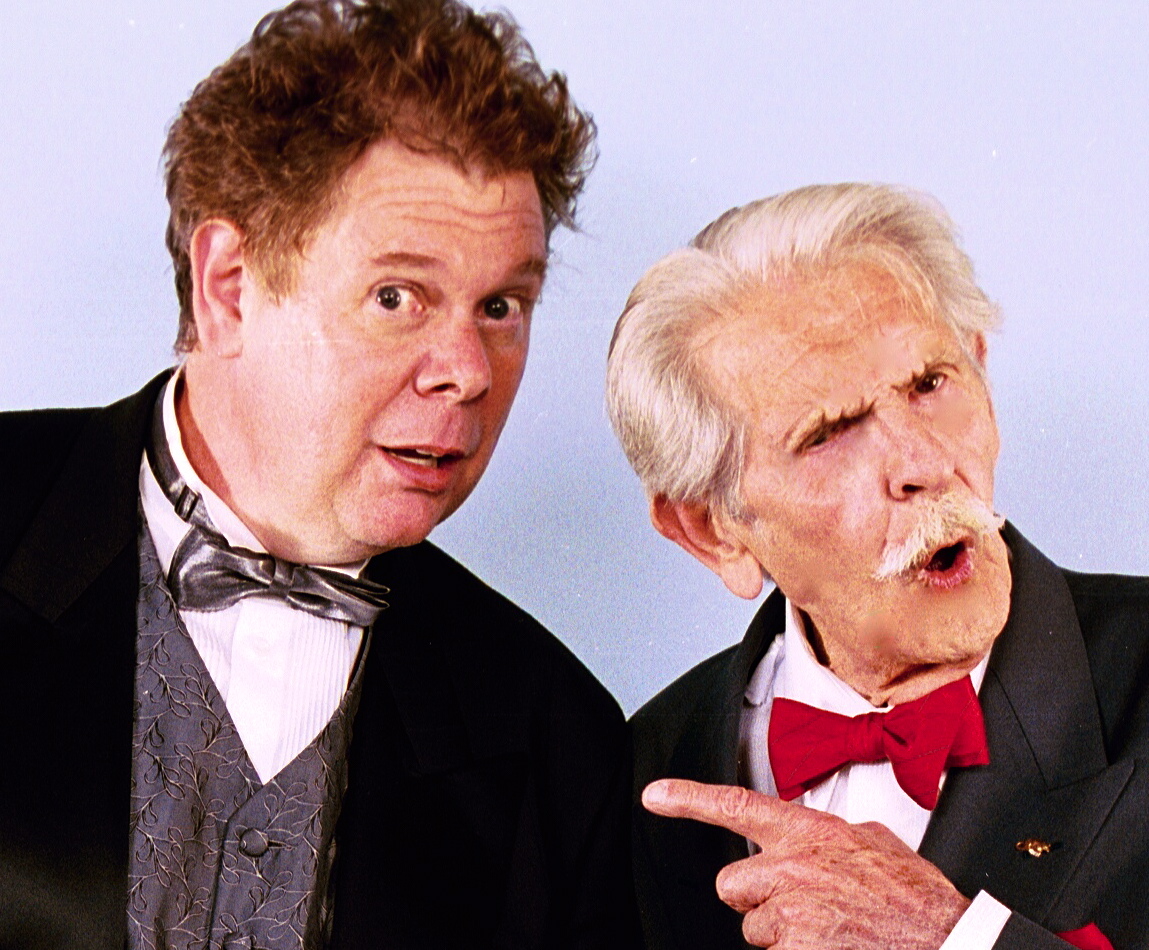
•April 7, 2017 • Leave a CommentThere are two basic ways to settle on a performing persona for your comedy magic show: This is mine!
There are those two basic ways to develop a performing persona for your comedy magic show:
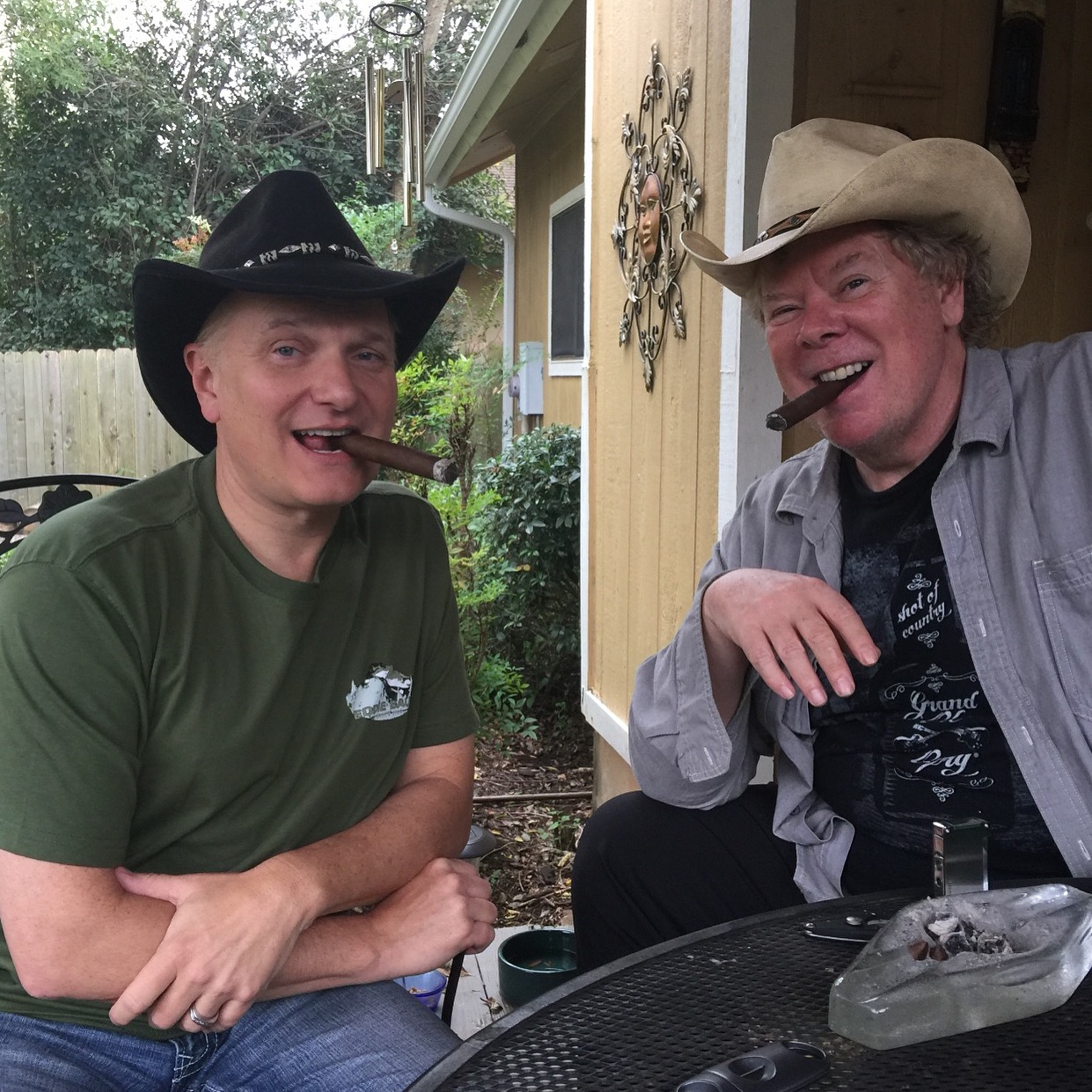 1 Create a fictional and larger than life character and run your material through that lens or filter while performing. Be prepared to be two very different people onstage and offstage. A perfect example of this approach is the outrageous character that Jeff Hobson has created so successfully. Mac King establishes himself as a “hayseed” character and turns this misconception to his own advantage almost instantly. When I was growing up I used to marvel at the wild onstage antics of Ali Bongo, to meet the quiet and reserved gentleman behind the “Shriek of Araby” was quite a shock.
2 Take your own personality and enlarge it so that it assumes the vehicle for a stage-filling entertainer. This is the more common, and I would suggest easier route. If you meet Michael Finney offstage you are basically talking to much the same person you were enjoying onstage; he is just a little bit more so when onstage. Justin Willman and Michael Carbonaro are perfect examples of magicians who project their offstage personalities adapted perfectly to their performing environment. Many of the more exaggerated magical performers still fit into this category fairly easily; from Tommy Cooper to Amazing Johnathan the “what I am is what you get…” approach is clearly part of their appeal. This is what I have chosen to do with my approach to comedy.
Take a good long look in the mirror and view your videos before deciding if you are more suited to doing funny things or saying funny things. Maybe it is a combination of these two approaches that you should make your goal while you perform your magic. Do you plan on performing “situational comedy magic” where the nature of the magical elements in your show does the heavy lifting in getting your laughs? Do you plan to tell a stream of jokes that keeps the audience laughing while you are performing your magic show? At an early age I became a big fan of the late Billy McComb and the seamless way he combined really strong magic with traditional stand-up comedy and I personally chose this route and have never regretted it.
Once you have adapted your performing persona then you need to use that as the template to shape the rest of your personal style, such as costume and material. When you have established a good persona you are well advised to keep it as a solid and consistent one and it isn’t worth damaging the integrity of it just to accommodate a one  off joke or trick. Look for something else that works just as well but allows you to remain in character. There is an unlimited amount of material out there to choose from and one of the weakest reasons to select something is because it works well in someone else’s act. It is a nice goal, but not particularly practical to have every element in your show 100% original, however, if you can integrate something into your work that is true to your character then it gives a holistic originality to the act in general.
Working with, and knowing, as many comedians as I do I am constantly bombarded with negativity about how “stock” most magicians’ material is. Sadly there is way too much too much truth in this opinion for me to defend our community too vigorously. Comedians usually work endlessly to update and perfect their comedy while comedy magicians are often more interested in adding a new trick. One easy solution to this is to make sure your persona is unique and not fall back on any stock smart ass magician stereotype.

Improving Your Comedy Magic Show…..
•April 3, 2017 • 5 CommentsThe following posts are taken from a recent article I wrote for Vanish Magazine. If you don’t get your free monthly download of Vanish Magazine you are missing a wonderful and FREE resource for magicians! Check it out at www.vanishmagic.com
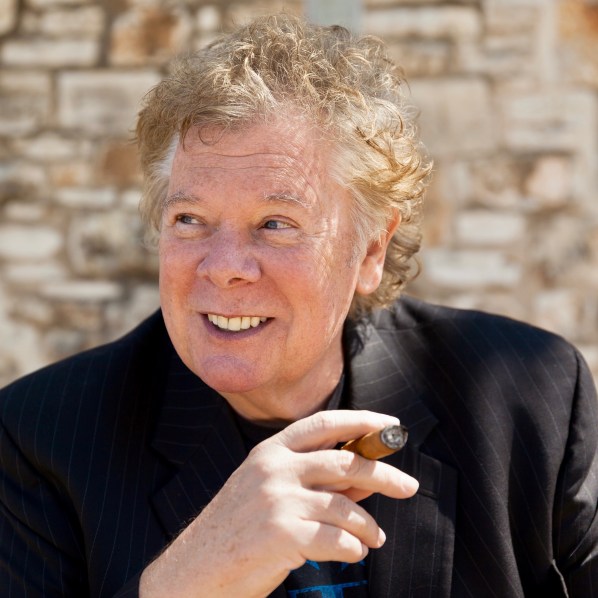
Sadly there are no hard and fast rules you can apply to shaping or improving a comedy magic show. What is perfect for one person can be disastrous for the next. The only real fixed rule is that the more you perform the better chance you have of really improving your show. With a manipulative or illusion show a mirror and a video camera can go a long way towards refining and perfecting your performance. It is one thing to master the mechanics of the magic you are performing, however, putting comedy into the mix definitely complicates the rehearsal process and introduces an X factor. Constant performance is the only key that allows you to incrementally develop a timing that incorporates the inconsistencies that live audiences bring to the table.
Forty-five years of making a living mixing magic and laughs have definitely given me  some heartfelt insights into the process of making this particular synergy work. The decade I spent headlining in comedy clubs was a wonderful training in making sure that the comedy in my show was as strong as the magic it contained. It is one thing to get laughs performing magic but quite another to really master both individual disciplines and achieve a blend that doesn’t sell either element short. The good news is that a strong comedy magic act can be immensely commercial and highly bookable. Lay audiences love to laugh; in fact most of them far prefer the experience of laughing to that of being fooled. Many magicians tend to forget this reality point; we particularly enjoy the experience of fooling and being fooled or we probably wouldn’t have become magicians in the first place; lay audiences are much less unified on this point.
What I want to do in this article is to set down a few steps that are well worth considering for the performer who wants to take his or her act to the next level. These steps and observations are based on performing experience I have made during a lifetime in magic and also spending quality time with world-class performers. I truly believe that serious thought about them will improve the quality of any comedy magic show. Do not forget though that however beneficial it is to think about things, it is only by putting those thoughts into application that you can really move forward. While these steps are primarily directed towards improving a show for a lay audience the basic principles hold true for performing to an audience of magicians. However, in this regard I will pass on some great advice I was given by the great Ken Brooke; “If you want to be a professional, never trust a magician’s response to your show or you will end up cutting out the bits that real people enjoy the most and adding things that mean nothing to non-magicians.”
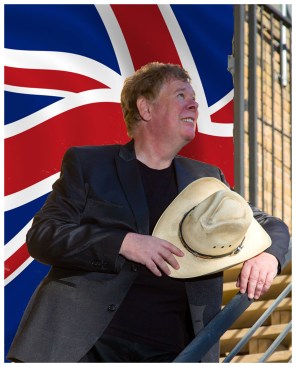 One important thing to remember as you improve your act is that a strong magic show is never a static thing. It is the sum total of the person you are at the moment you are while performing it. I have seen many fine manipulative acts that mold a perfect 12-minute show and then continue polishing that same performance for decades. This really doesn’t work in the comedy field, and yet I see many comedy magicians who take the same approach. Times, attitudes and sensibilities vary very quickly when it comes to “funny” and need to be considered on an ongoing basis. “The Baffling Bra” may have been a viable piece of material a couple of generations ago but is scarily out of tune with contemporary times. No, I am not influenced in making this statement if you tell me, “It still gets laughs in the show!”
One of the chief complaints about comedy magic shows from serious bookers/buyers is the outdated nature of much of the comedy incorporated in the show. The last thing you want to do when presenting yourself as an entertainer is to look like someone who is out of touch with mainstream or contemporary audiences. You don’t need to re-invent the wheel, but you do need to realize that a great deal of comedy magic is very dated and needs to be freshened up. You don’t need to burn your Robert Orben books but you might want to seriously limit your jokes from it and then update them! Saying, “My act works the way it is (and always has) so I‘m not going to change it,” is a sure fire way to avoid improvement.
Another Clip from Magic Palace.
•March 2, 2017 • 3 Comments I figured I would post the second set I performed on the Magic Palace series on Canadian TV back in the 70’s. I think the set holds up rather nicely but the size of the lapels on my jacket are fairly scary! During the following decade I sported a mullet that rivaled Billy Ray Cyrus, so I guess I was a fashion creature of my time. Curiously enough I still feature the trick I performed on the show in my act—I guess fashion choices are more glaringly dating than strong magical effects.
I strongly suggest you visit the Magic Palace exhibition on the Magicana site at http://www.magicana.com
There are some wonderful segments of the show featuring really fabulous performers. Jules Lenier, Ron Wilson, Michael Skinner, Billy McComb, Jay Marshall, Ste
ve Baker, Piet Paulo, Martin Nash, Albert Goshman,Pat Page and scores of my other dear friends are featured in the exhibition. It is a fabulous resource for magicians to explore and enjoy. You will be amazed at some of the material that has been preserved.

Close-up Card Magic.
•February 27, 2017 • 1 Comment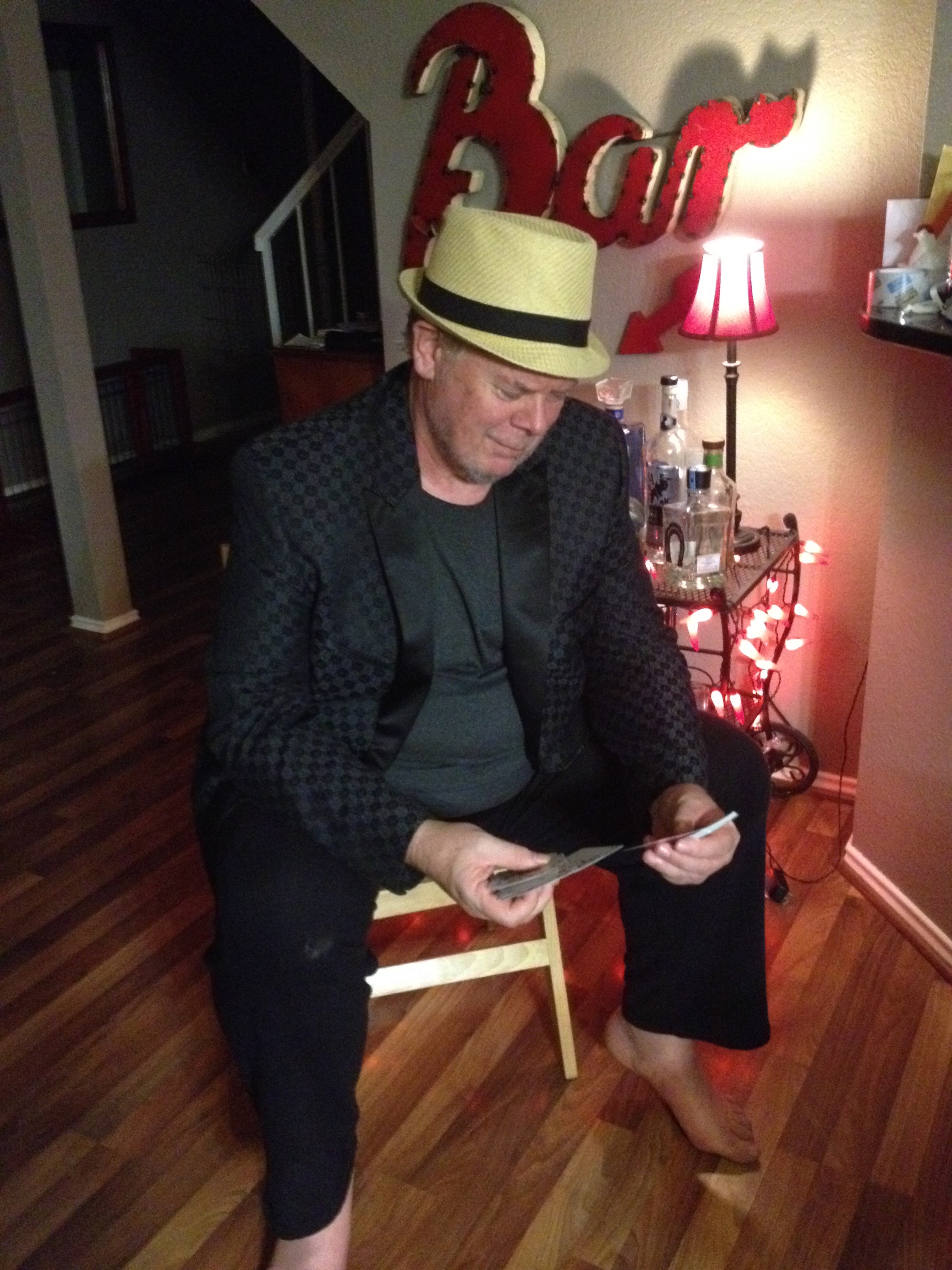
I am a big fan of good old fashioned sleight-of-hand with a genuine deck of cards. Somewhere along the line I decided (quite correctly in retrospect–for me personally) to stop performing close-up shows and focus exclusively on my Stand-Up Comedy Magic. Now as I am very happily entering into a slow speed semi retirement, I am delighted to be able to re-devote a significant portion of my free time to working with a deck of cards again. There is a wonderful purity to creating eye popping magic with just 52 pieces of cardboard.
I was delighted to find, on the Magicana website, this video clip of me performing a close-up card set back in the ’70s. The footage has suffered over the years but it is still a pretty cool 8 minutes of card work! I guess if you can’t put something like this on your blog—there isn’t much fun in having a blog. I watched the clip again to look for any ideas as I am working out a date with Jack Goldfinger to do my first week in the Magic Castle Close-Up Gallery in over 30 years! Check out the clip…
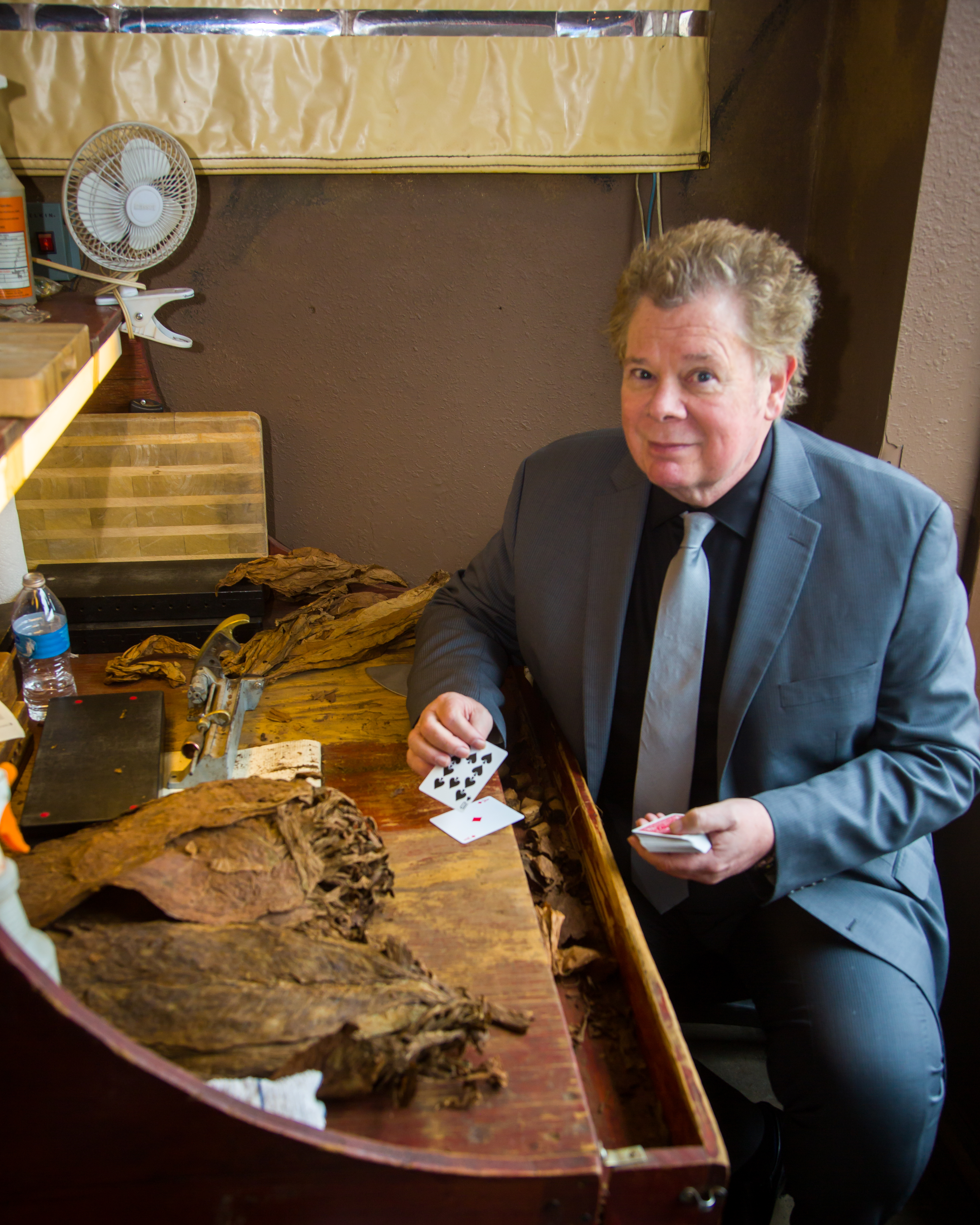
Daryl, The Fooler Dooler in Chief.
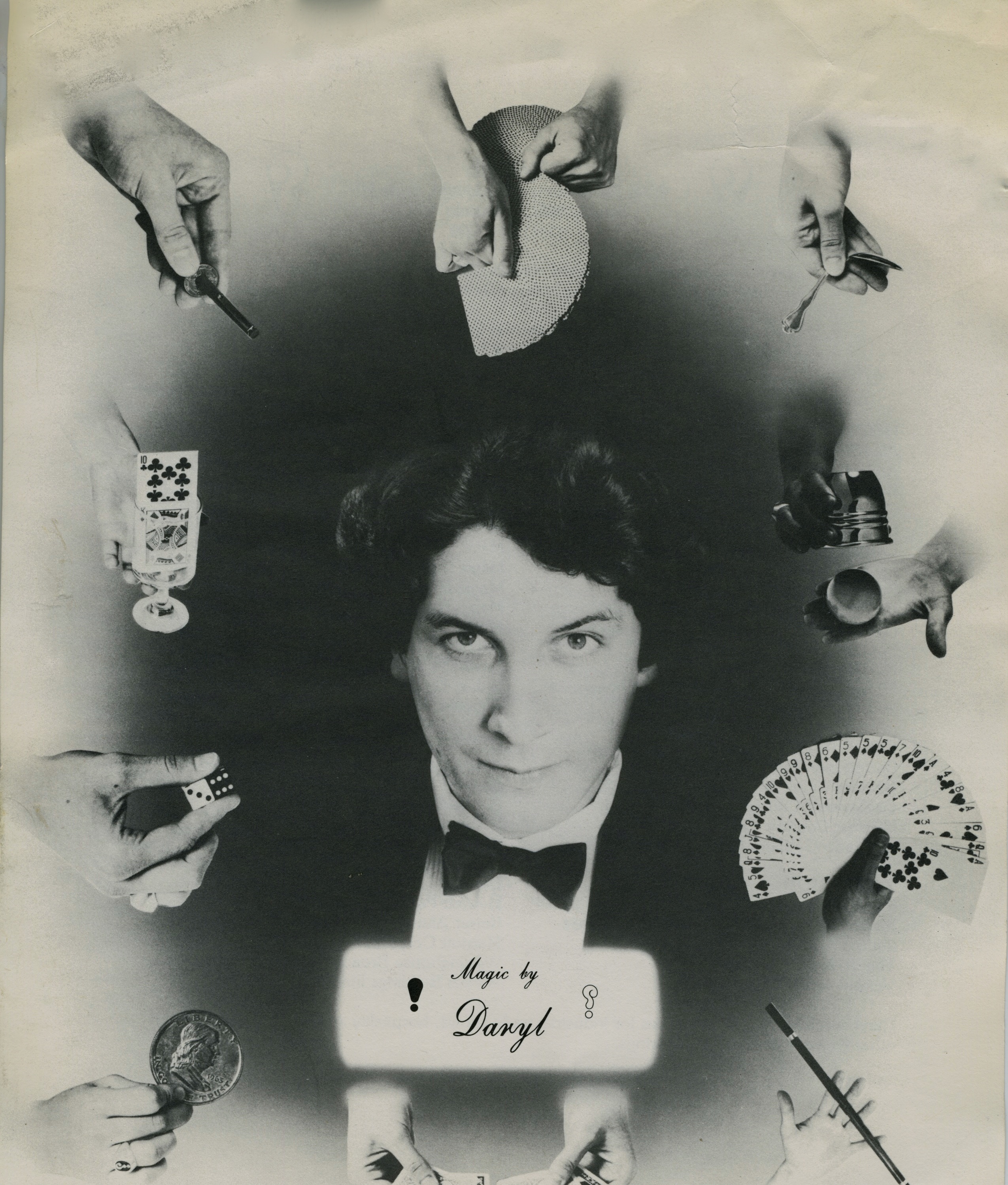
•February 25, 2017 • Leave a CommentI am deeply saddened today to hear of the passing of my dear friend Daryl. Here is a story about him that I had published in Magic New Zealand many years ago. Life in the magic world will never be the same without the possibility of bumping into Daryl and enjoying his company. He was a truly special person. I wrote a more extensive cover story about Daryl in 2014 for Vanish Magazine and it can be downloaded at https://joom.ag/s48W . I share these stories with the greatest respect and heartfelt gratitude for having known Daryl and having had him in my life for about 40 years. I will miss Daryl enormously as will so many others in our community. My deepest sympathy and condolences to Alison and his two daughters

Daryl, The Magician’s Magician.
The first time I heard about Daryl was when I was working at the Magic Cellar in San Francisco. He was held in great esteem by the local magicians and was considered the man to watch. Sadly our paths did not cross in that gloriously strange establishment.
My first meeting with Daryl was in Los Angeles when he was visiting the Magic Castle. I was hanging out with my friend James Lewis and we ended up in one of those after hour’s magician sessions that were such a delightful part of an evening at the Castle.
I watched Daryl perform a few card tricks and immediately tucked my deck of cards firmly in my pocket. I definitely felt outclassed: not just by the quality of Daryl’s card work but also by his amazingly light and quirky presentation. I have always felt rather awkward performing for my fellow magicians but Daryl seemed to thrive on it! It doesn’t surprise me in the least that he became ‘The Magicians Magician.’
During the 80’s my wife Susan and I formed a company and produced a series of shows for  corporate clients. One of my very first moves was to sell the client on close-up magic for their functions. It was then that I really got to see the full strength of Daryl’s performing style. He was without question the most effective strolling magician I had ever seen. Period.
I don’t know about you but nothing gives me the Heebie Jeebies more than the process of performing walk around magic in a banquet room. I have done it but never learned to enjoy it. Daryl was in his element and strolled through the crowd like a whimsical troubadour dispensing his magic like a blessing. Time and again I saw him look at a group and instantly register not just when to perform but when intruding on a group would be a mistake. Believe me, as a producer, the last performer you want is to hire someone who can’t make that distinction.
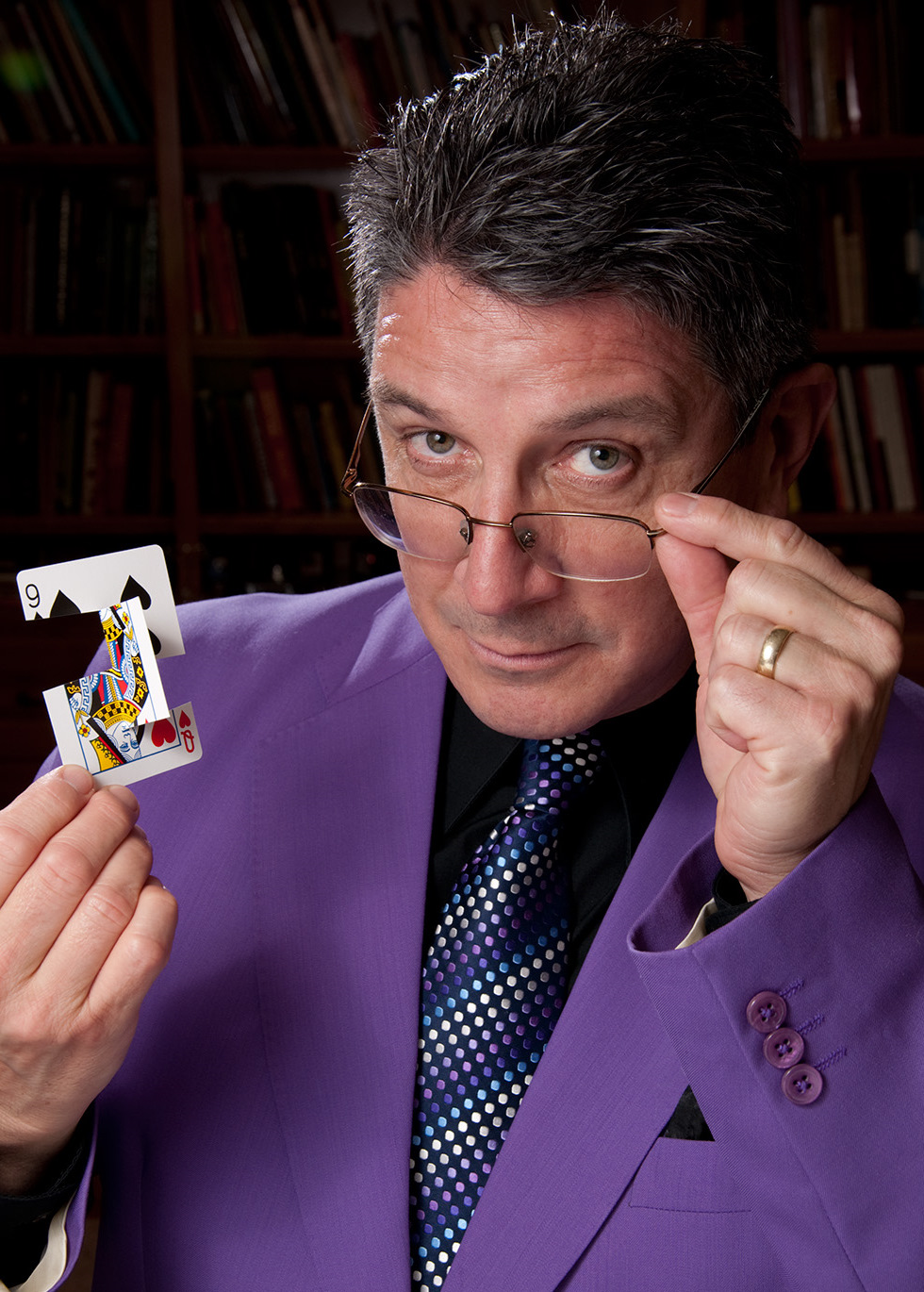 My perfect A-team when it came to performing at a corporate function was Daryl and Bruce Cervon. They were a perfect compliment to each other. Bruce would settle down at a table in the corner of the room and gather a huge crowd to watch him. He always started by saying, “I’ll do 15 minutes on then break for 10.” He never did. Once Bruce got started he never stopped. In fact stopping a freight train might have been easier! He would create a sensation at the side of the room while Daryl would nonchalantly wander among the crowd and bring the magic to the rest of the room. It was a joy to watch.
Of course, many magicians are more aware of Daryl as the traveling magic dealer who seems to effortlessly sell his wares as quickly as he can demonstrate them. Daryl’s knowledge of magic and the quality of his routines make it a safe bet that your purchase will be a good one. Ah, but if only one could purchase that certain something that Daryl adds to routines in his performance!
That being said, I truly believe if a performer masters Daryl’s Ambitious Card Routines, Rope Routine and Pakistani Rope Trick; they can make a fine living with just these three tricks.
One last thing: did I mention that Daryl is one of the nicest and smartest people in the magic community? I guess I did now.
“My name is Lewin. Nick Lewin. ”
•September 15, 2016 • 4 Comments
The best part of being a magician is that a great deal of the time I not only feel like a secret agent but I live like one.
I sat across the green felt covered desk, bathed in the light from a single brass lamp. I looked into the gray eyes of the man sitting there as he finished filing his pipe from a leather pouch on the desk. I felt a swell of affection for this man who had sent me all over the world on adventures that had taken me into moments of great joy and even greater danger.
He looked up from his pipe filling activities and smiled a smile that never quite reached his eyes. “Well.” He said, in a mild voice; “That’s the job. If you want to take it you will need to be in Jamaica by Friday.” I returned his smile and said; “I’ll be there, what do I need to know?”
I suddenly abandoned my well-worn fantasy and reluctantly acknowledged that I wasn’t James Bond receiving a mission from M that would save the world. It was just me, Nick, on the phone with my agent Barry accepting another gig on a cruise ship. No saving the world, just two 45-minute shows. Darn.
Let me explain. Unlike many magicians I didn’t become a magician to become another Harry Houdini. It wasn’t like that for me at all. When I was eleven years old I went to the local cinema and caught ‘Dr. No’ the first James Bond. It changed my life. After seeing the movie, I found most of Ian Fleming’s 007 novels in my brother’s bookshelf and read them with the same intensity that Ricky Jay must have studied ‘A magician at the card table.’
I loved the gadgets and elegant tuxedos that were such a large part of Mr. Bond’s world. I craved those exotic locations scattered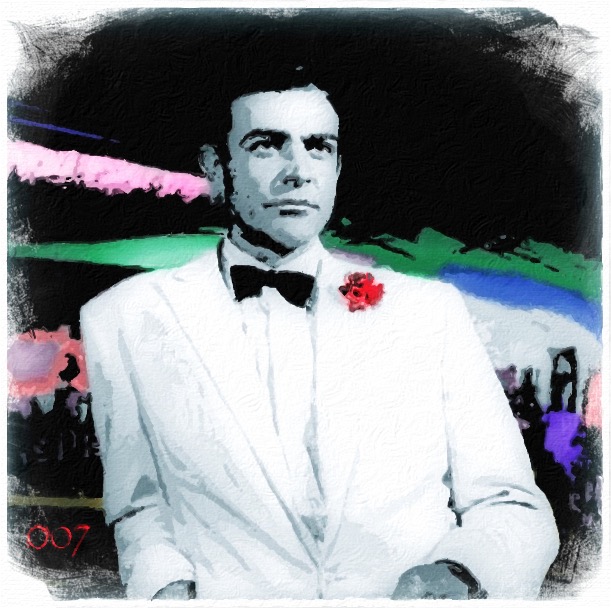 across the globe that Bond visited with a nonchalance that I began to practice on a daily basis. Nonchalance is hard to carry off at such an early age and my school friends just thought I was a little crazy—hey, I also performed elaborate card tricks. That is an even surer sign of craziness than talking to yourself.
When the second Bond movie ‘From Russia with Love’ was released I was sitting in the cinema for the very first showing. For me the most exciting part of the movie wasn’t the action scenes or the fighting. It was the incredible briefcase that Q had created for Bond. The attaché case was rigged to the hilt with tear gas canisters, hidden gold coins, special locks and best of all a secret knife that popped out from the side of the case. I lusted after that case with all my heart.
After returning from the cinema, I went up in the attic and retrieved an old discarded briefcase that had previously accompanied my father to his office in the City. Since I didn’t have a folding rifle or bug-detecting equipment I decided to put the magic props from my fledgling magic show inside the case. They looked pretty darn good in there.
Forty-five years later I am still carrying the latest version of that prototype case with me as I jet around the world. The case is now filled with very cool magic props and every amazing electronic item that has an Apple on it. James Bond would have killed for an iPhone in those Fleming books from the fifties. Even Q wouldn’t have believed what it could do.
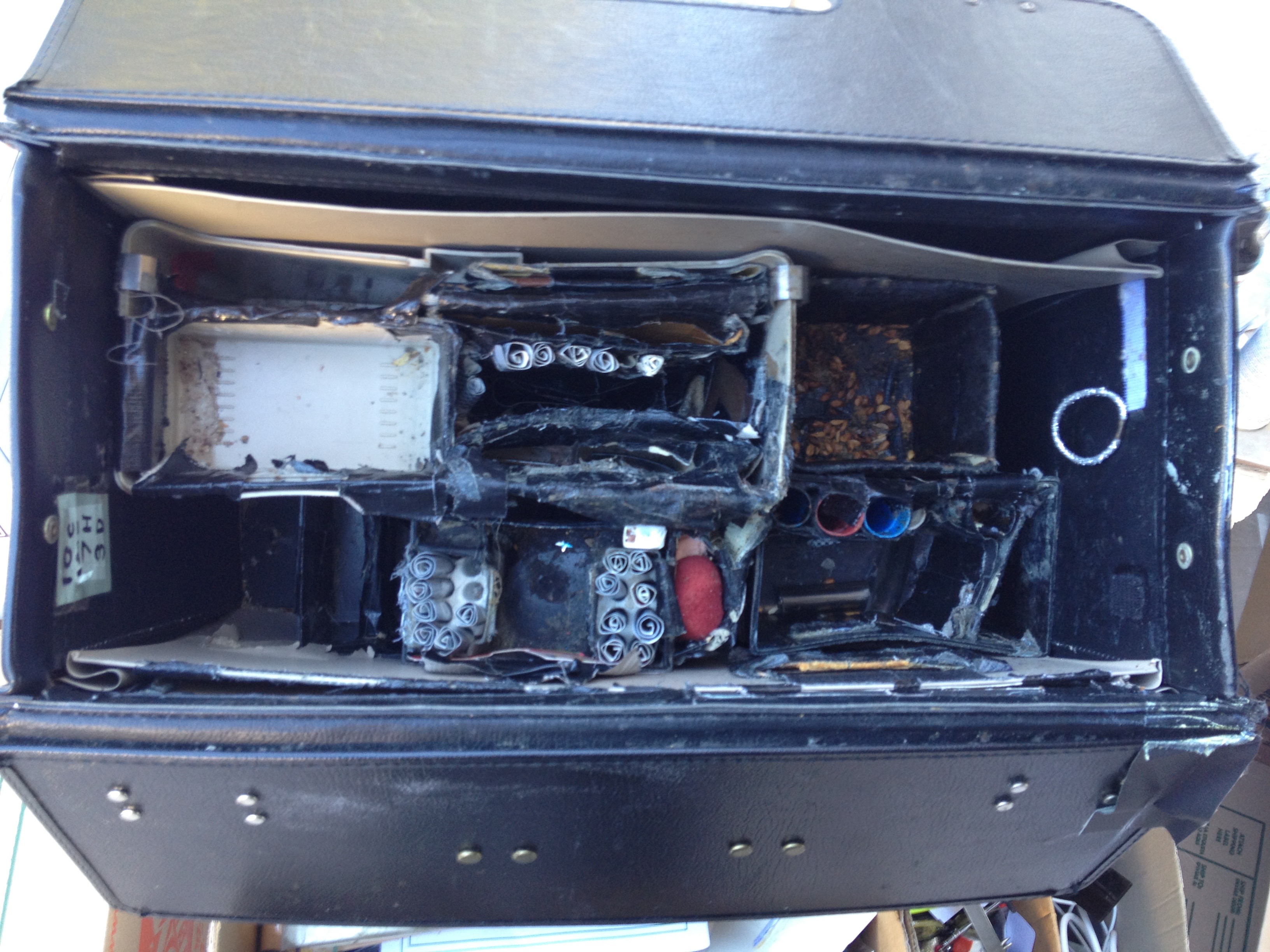 My case is heavily gimmicked and contains 34 tricks inside it, as well as the electronics and it still passes as hand baggage. This case goes onstage with me every single show and even houses a concealed butterfly knife with which I slice a lemon in half on a twice nightly basis. There are no golden coins hidden in the lining of the case but there is a secret pocket that contains several $100 bills. Just in case.
I left school and became a full time magician and began the endless traveling that has so far characterized my life. I have managed to visit all those exotic backdrops featured in the Bond books and films. In fact I’m pretty sure I’ve been to scads of places that 007 never even knew existed. I am now truly as at home in Jamaica and Russia as I am at home in Las Vegas— maybe more so.
While I do sincerely love magic and the business of its performance, it is the vision of elegant espionage that has really fueled  my life and lifestyles. Like all guiding influences, the memories that ignited my passion have faded over the years. I have finally realized, but steadfastly refuse to acknowledge, that I will never be James Bond. Just as other magicians have realized that they will never be Houdini or Dai Vernon. Life is tough.
The good news is that I do have a black leather case filled with cool gimmicks and gadgets that accompanies me as I travel. However I have reluctantly realized that I will probably never be asked to smuggle microfilm across enemy lines, concealed inside my ‘Devils Hank.’ I have never lost the desire to be asked to do so though. Without a dream you become an act instead of an artiste.
So that’s my story: if you bump into me in Rome or Venice walk up to me and introduce yourself. I will look you directly in the eyes and say; “My name is Lewin. Nick Lewin.”
The photo above, of me standing in front of the Cecil Hotel in Alexandria, Egypt has special significance. The Cecil was the official, unofficial home of the British Secret Service during the Second World War. My Grandfather spent time there….
You’ve either got or you haven’t got style…. (but is it your own?)
•September 7, 2016 • 1 Comment Before we talk magic, let’s look at the definition of the word style that comes up on my Mac after I double click the word and then three-finger click it. Ah, I do love these new gestures that are possible with the Mac trackpad!
Here is what arrived,
1 A manner of doing something:
2 A distinctive appearance, typically determined by the principles according to which something is designed:
3 elegance and sophistication:
4 A rodlike object or part, in particular:
I think we can rule out the fourth definition, but let’s look more closely at the first three. How can we apply them to magic? ‘A manner of doing something,’ well, to me this implies a consistency of approach that unifies all the separate ingredients that blend together and create a show. It applies to what you do in the show, what you say in the show and how you execute these elements.
The first step to becoming an elegant and sophisticated (see definition three) performer is 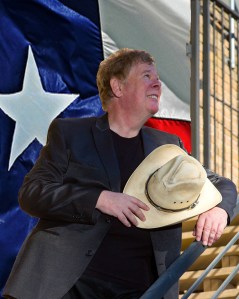 to follow that great aphorism ‘Know Thyself‘ which is most often attributed to Socrates. You can not develop any form of individual style without looking very carefully at who you are–in particular your strengths and weaknesses.
While it is possible to construct a totally separate stage persona from your real-life attributes, it isn’t easy. If you are aren’t a smooth, elegant, good looking charmer, who moves well–then a silent manipulative act probably isn’t your thing. Look at yourself physically and make sure that you are actually seeing yourself as an audience member will see you. Better leave that to the Lance Burton’s James Dimmare’s and Jason Andrews of the world.
If you aren’t a skilled talker, with a ready wit and sense of humor then chances are you shouldn’t be telling jokes in your show. You can’t just take a bunch of stock lines and string them together and have any hope of achieving style. Maybe you should be looking at the kind of magic where the situation is funny and it is this that makes the audience laugh. Then little by little you can add a line or two that is funny because it came from within you and is truly your style.
 The sad truth is that you can’t borrow style, you can’t buy style, you can’t steal style. If it belongs to someone else then it will never really be your style. What you CAN do is to learn about style by watching how other people have developed and applied their own style.
In magic, there are so many routines available in books, DVDs, etc. that a magician can begin to believe that everything out there is available and it is acceptable to borrow, use or steal anything. You don’t own a trick by buying it, reading it or outright purloining it. Style is something that has to come from a master game plan that you have developed, otherwise, it’s monkey see monkey do.
I am a huge fan of Jeff McBride and Eugene Burger, I am also a big fan of the style which Jeff has brought to teaching magic to his lucky Mystery School pupils. It worries me more than a tad when I see how many of his students seem to want to become McBrides. They dress like him, perform like him and although I haven’t any inside knowledge of Jeff’s take on performing, I find it hard to believe that this is any part of his philosophy. I suspect/hope that it is a passing phase for these individuals however and sanity will follow!
On a very practical level (my favorite one) to fine-tune your own style, you can examine 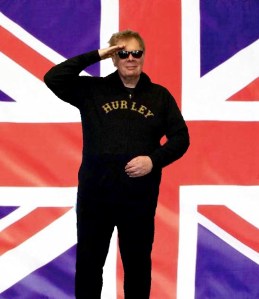 your act and pick it apart with a fine-tooth comb and eliminate items that may work on some level but are counter-intuitive to making you the performer you really want to be. First, develop the vision of who you want to be–make it based on who you are, and then chip away everything in your act that stops this happening.
I often hear magicians excuse the use of a hack trick or a hack line by saying, “Well, it works,‘ or “It gets a laugh.‘ However, ask yourself what it says about you that you haven’t found a better way to express your personal style and personality. The failure to do this is one of the reasons there are so many magicians and so few artists and stars in the magic world.
You are selling yourself short if you just want to be a haphazard amalgamation of everyone else. Learn from others how to develop your own style, when you have learned everything you can from them–move on to someone else and see what you can learn from their approach. We all need teachers, role models, and heroes, but at some point (to steal a key lesson from ‘A Course In Miracles,) “The time for learning is over.”
It is way tougher to learn to be yourself when performing than to execute the perfect second deal! A second deal is only perfect when you don’t realize it is happening–I guess that’s kinda‘ my theory on style. While not wanting to simplify it to the “You’ve either got or you haven’t got style………” from the song lyric, I guess what I’m saying is work like a maniac to become a person with your own style and then learn to forget about it so it doesn’t look phony.

What a great honor, receiving the Robert-Houdin Award!
•August 22, 2016 • Leave a Comment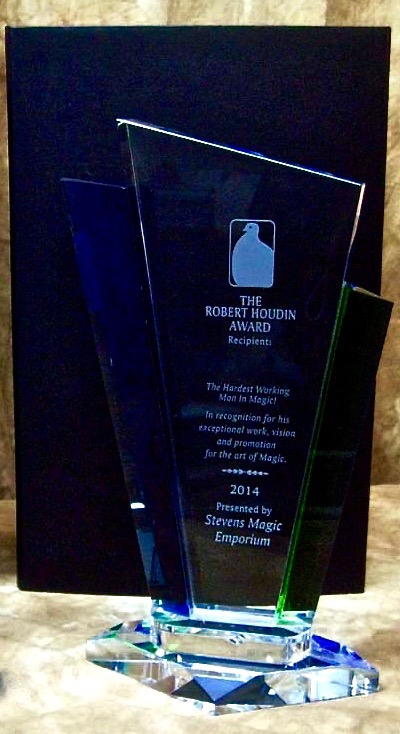 I was recently proud, thrilled and delighted to be the 2016 recipient of The Robert-Houdin Award for my work as a performing magician. The award is presented annually by Stevens Magic and I am the third magician to be honored in this manner, the first recipients being Paul Romhany and Jeff McBride. It makes the award even sweeter being in the company of these two fine performers. Both Paul and Jeff are not only good friends but inspirations to me in many ways.
I am particularly proud to receive an award that bears the name of Robert-Houdin as he has been one of my greatest magical “heroes” from a very early age, when I first heard of this sophisticated and mysterious French Conjurer from whomHoudini stole his name! The great story of Robert-Houdin presenting his “Light/Heavy chest and quelling a native uprising in Algeria has long been a major part of my lecture for lay people.
Jean-Eugène Robert-Houdin (December 7, 1805 – June 13, 1871) has long been considered the  father of modern magic and was largely responsible for bringing in the new style of magic. I would heartily recommend anyone unfamiliar with this master magician to read the Wikipedia biography about him https://en.wikipedia.org/wiki/Jean_Eugène_Robert-Houdin His is an amazing story about when mechanical wizardry was most successfully blended with sleight of hand.
I performed a show for five years at the Maxim Hotel in Las Vegas and in a curious way it was something of a personal tribute to Robert-Houdin’s famous Parisienne show “Soirées Fantastiques.” The showroom that I appeared at in Las Vegas was a 200 seat room just like Robert-Houdin’s and allowed an intimate production of parlor effects in much the same manner. My show premiered on July 3rd 1995 exactly (to the day!) 150 years after Robert-Houdin’s show did.
I want to thank Joe and Mark Stevens and everyone else at Steven’s Magic for this great honor. It really meant a great deal to me on many levels.
 REMARKABLE MAGIC