Get ready to explore the ’70s era Magic Castle a little further!
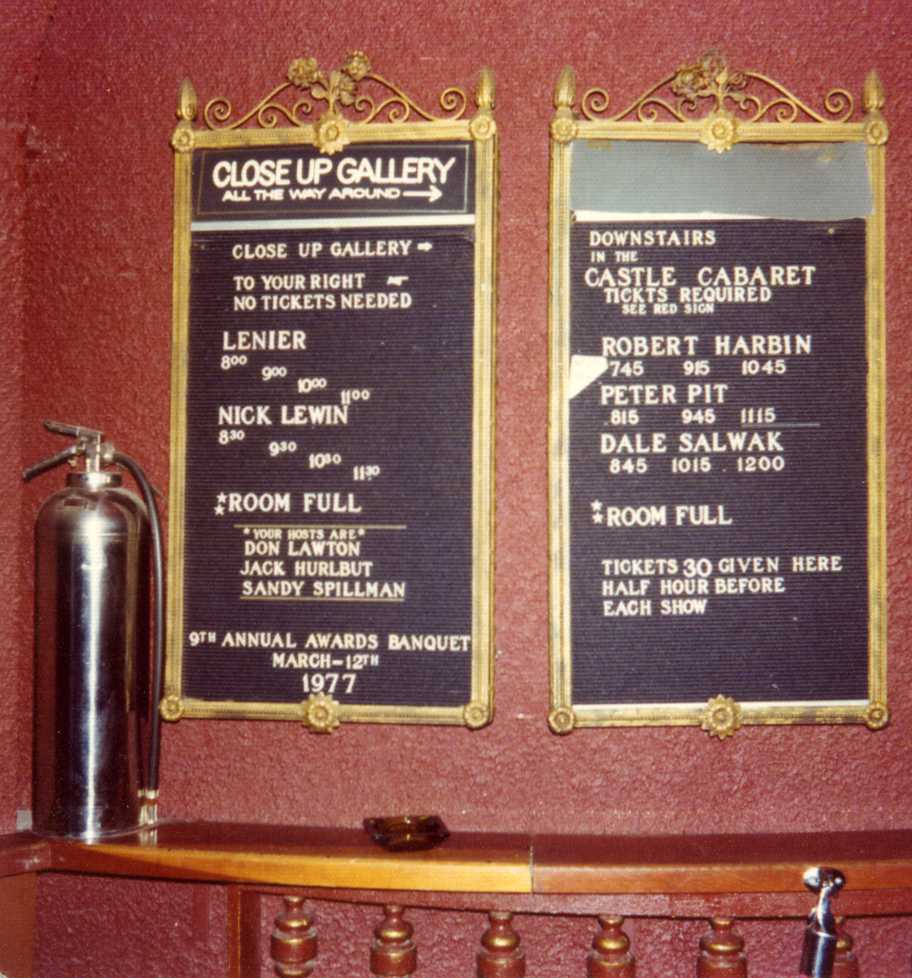
In the mid ‘70s the Castle was a demonstrably smaller space and contained just two show rooms: The Close-Up Gallery, and the Castle Cabaret. The Cabaret was a tiny theatre located in what had begun its life as the basement of the original building. It seated about 40 people in comfortable red velvet movie house chairs, and then another 15 or so people stood at the rear of the room. It was always referred to as the Big Room!
In my first week performing in the Castle Cabaret, sharing a bill with the delightfully enigmatic Kuda Bux, I had what remains to this day one of my headiest performing experiences. Prior to introducing the show, Don Lawton popped into my dressing room and with a twinkle in his eye casually informed me that Cary Grant was sitting with David Niven in the audience, and seated at the rear of the room were Ingrid Bergman and Goldie Hawn. Was I nervous? Oh yes…
After concluding a show in the Cabaret I would often make my way up to the Castle library to see what was happening there. There were two ways to navigate this particular journey; one was via the grand central staircase with its imposing grandfather clock. The clock was widely rumored to have stopped at the exact minute Jay Ose had shuffled off this mortal coil; actually I heard several names mentioned in this connection, but most frequently it was Mr. Ose. However, generally my preferred route upstairs was a detour that involved a short cut through the kitchen that allowed me a brief sojourn in the little room that housed Prof. Dave Bourne. Bourne was the genial bearded ragtime pianist who brought Irma to life on most nights. Dave was a Kenny Rogers look alike and the kind of man who improved any day just by spending a few minutes in his company. I spent many happy hours in Dave’s anonymous little hideaway eavesdropping on guests as they requested their favorite tunes.
Dave and I had become firm friends dating back to the period when he had accompanied the acts at Milt Larsen’s Mayfair Music Hall in Santa Monica. One evening while performing at the Mayfair my Zombie Ball had dropped to the ground in mid routine, and Bourne had been deeply impressed with the nonchalant manner in which I continued the routine using just the gimmick. I’m not sure if the audience saw me sweat during the incident but they certainly heard plenty of laughter emanating from the orchestra pit.
Next post we will explore the upstairs of the Castle!
This is the continuation of my virtual tour of the ’70s era Magic Castle.
Another iconic resident of the Castle was the legendary “Senator” Clarke Crandall. My first meeting with “Senator” Crandall was in his capacity as host. No sooner had we been introduced than he began to recite a quasi-biblical story about God instructing mankind on how to make a profit on the selling of polo shirts by sewing an alligator on the front of them. As he spoke he puffed on one of his signature spiral shaped cigars that definitely looked a great deal better than it smelt. After Crandall finished his recitation, I politely mentioned how much I enjoyed the writings of Woody Allen. The tale he told had been taken word for word from Woody’s first book, but fared even better for being translated into the spoken word. After I made this observation, the Senator gave me a sideways glance, a slight scowl and said, “A magician who reads actual books. I will have to keep an eye on you.” I am not sure if he really did keep an eye on me, but if the truth is told Crandall always scared me just the tiniest bit. I wish I had got to know him a little bit better.
Upon entering the Castle, once you had passed through the sliding bookcase, the first thing most magicians would do was turn their gaze to the left and see if Dai Vernon was in his regular seat on the little couch in front of the Close-Up Gallery. Most nights would find him holding court there, with a cigar in one hand, a deck of cards in the other, and a snifter of brandy on the table in front of him. Seated around “The Professor” would be a crowd of the very best of the current crop of Young Turks hanging on his every word. They were waiting for him to casually impart the “moves” and gems of card handling in person that had escaped being immortalized in his written work. They were seldom disappointed.
Vernon was gracious and generous in these impromptu demonstrations of his mastery as he imparted his endless wisdom. After a while one began to realize how shrewdly he calculated the ability of his students to grasp the lessons he dispensed. One quickly realized that like every true master Dai was fully aware that no information passed on to lesser minds was truly worthwhile if those receiving it were unable to put the information into application. The Professor was exceedingly careful to teach each particular student exactly what it was that they needed to learn. It was also instantly apparent that nothing gave Vernon more pleasure than seeing a young magician perform a sleight or trick that added to his own inestimable knowledge. The purest form of teaching is always a two-way street between those involved in the process.
Some nights The Professor was joined in his corner by master magicians such as Bruce Cervon, Larry Jennings, Mike Skinner, or Tony Giorgio–it was truly a sight to behold as they traded their tricks. I loved to watch these mind-bending sessions.
Over the years Vernon became quite a fan of my comedy magic act, but could never quite understand my need to inject comedy into my sleight of hand work. My very favorite memories of Dai were the nights when I would drive him back to his little apartment, stopping at the local supermarket for a few groceries. Pushing a rickety shopping cart around the Hughes Market while a demonstrably inebriated Professor selected items for his refrigerator was an honor I remember fondly. Usually Vernon would take these opportunities to good naturedly assure me it wasn’t too late to forsake the jokes and concentrate fully on my card work.
The third part of my tour will be in the next blog post!
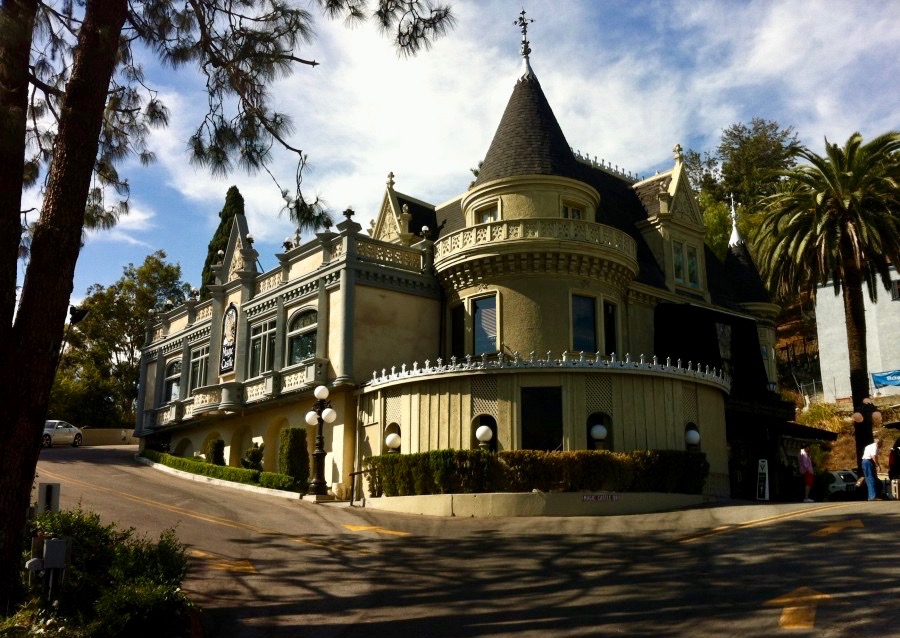
“We sat around in front of the turreted Victorian styled building in rows of folding chairs, directly ahead was a makeshift stage underneath a canopy of black and white balloons. The occasion was the 50th Annual Founders Day Party at the world famous Magic Castle on the second of January 2013. There was the hustle and bustle of gossiping guests who were busy catching up with each other, seeing and being seen. The chance of mingling with the famous, not so famous, friends, and foes meant that the seats weren’t filled until the formal ceremonies commenced. I realized that I had never seen some of those present in sunlight before, and I’m not sure it improved all of them.
As the speeches commenced I settled back and enjoyed listening to Milt and Princess Irene Larsen share their anniversary Magic Castle memories. The beloved duo talking were the two remaining founders of the world’s greatest magic clubhouse. I knew them both well enough, and had known them for long enough, that I was darn sure that there was little they would say that would surprise or profoundly enlighten me. Sitting under the California sunshine on that balmy January afternoon I allowed my mind to drift back to past eras and previous visits to this hallowed magical playground. There had been a decade when it had seemed like my second home.
Most, but not all, of my memories of the Magic Castle were very happy. The prime source of any sadness about the Castle was connected with how many of my favorite people were no longer in their usual places within its red and golden walls. Waiting there in the shadow of the main entrance to the club, I found myself longing for a draft beer and shot of chilled Patron from the ice luge that had been installed in the Inner Circle especially for the event. However, there was still a little time before the formalities of the occasion morphed into the party that was destined to follow. Sitting on that increasingly uncomfortable folding chair, I allowed my thoughts to drift back to the days that were to me the halcyon era of the Castle. Come join me on my nostalgic trip back to the mid-seventies incarnation of this iconic institution.”
I first joined the Magic Castle in February 1974, and like every other member before and since that time, I was assured that I had missed the really great years of the club. The Magic Castle has evolved and followed its own strange path over the years, and to call the Castle eccentric back in the ‘70s would be an understatement of monumental proportions. The Magic Castle was a wonderfully quirky little drinking club that marched to the curious beat of magic. It was filled with a vibrant bunch of magicians, celebrities, nobodies, and somebodies all rubbing shoulders in an awesome mix of incongruent elegance, and a general sense of vague disorder. Back in those days the Castle didn’t really follow a blueprint, it just happened, unfolding in a somewhat haphazard manner. This was a huge part of its charm.
On my first visit to the Magic Castle I really wasn’t too sure what to expect, although I did know it was considered my many to be the worldwide center of the magical arts. However, exactly what happened after you whispered “Open Sesame” to the golden owl, and walked through the sliding bookcase was a mystery to me. This was the perfect way to experience my induction into the mansion at 7001 Franklin Avenue; for isn’t mystery the natural ground zero to any magical experience?
On my first visit to the Castle I was lucky enough to be given a tour and introduced to the regulars by the inimitable Don Lawton. Don was one of the hosts at the club, and as I was to soon discover he was also one of the finest, kindest, and funniest members of its community. On a busy and overworked evening Don took the time to thoroughly welcome this 22-year-old newcomer to his world. In those years the Castle hosts were magical performers whose very presence added immeasurably to the joys, authority and authenticity of the club. These gentlemen didn’t just introduce a show they were a show.
In addition to Lawton the hosts included close-up of wiz Jack Hurlbert, and the trumpet playing Mickey O’Malley. Towards the end of each Castle evening Mickey would play “Cherry Pink and Apple Blossom White” on his trumpet in the Irma room, somewhat to the bewilderment of unaware visitors. In a club filled with eccentrics Mickey stood second to none in this regard.
We will continue our virtual tour of the ’70s era Magic Castle in the next post.
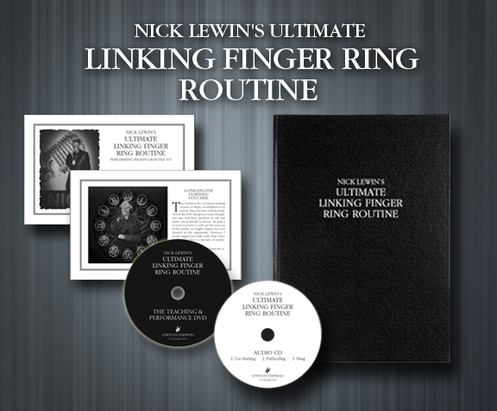
You might enjoy checking out this trailer of my Ultimate Linking Finger Routine. It gives really nice taste of some of the things that make the routine so special.
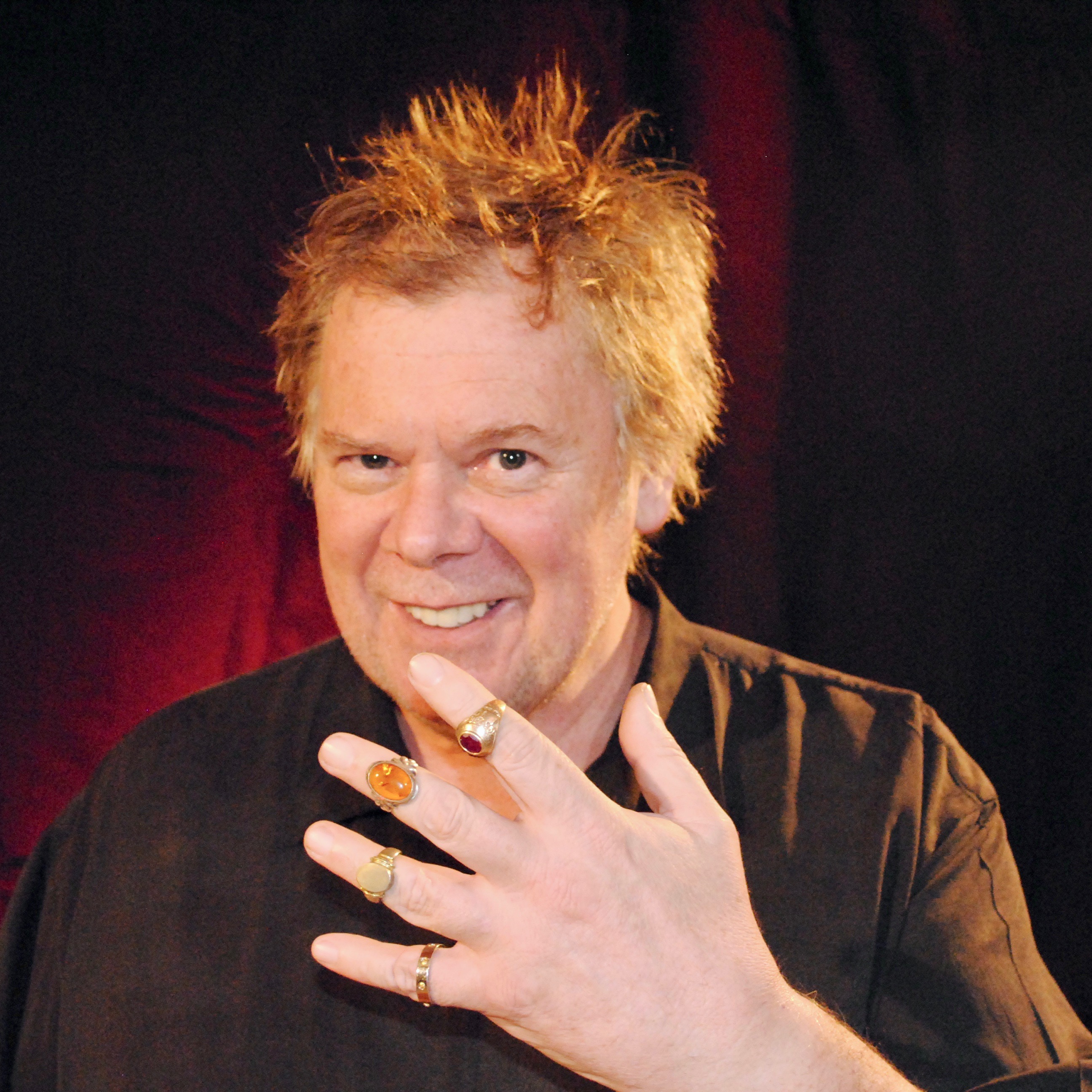
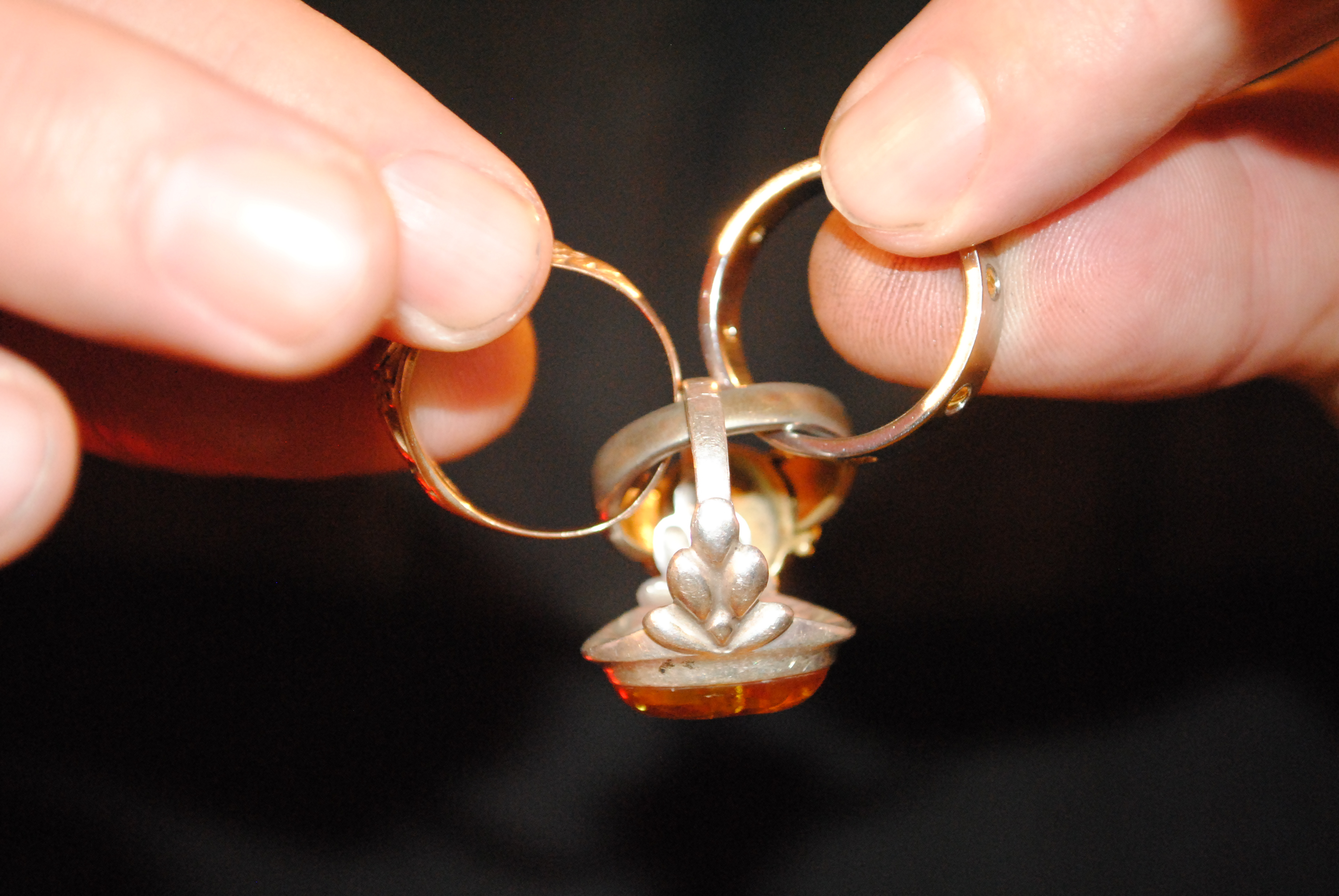
I am celebrating my 40-year anniversary of linking finger rings together for audiences’, and I thought it would be fun to write a blog post about my history with this great trick. It has been the most powerful secret weapon in my performing repertoire, and my most important trick, for almost my entire career so I want to tell you the evolution of this effect in my show.
The first person I saw perform the Himber Linking Rings was the great Al Koran back in my early years in England. I bought the routine that Koran marketed and instantly discarded it due to the really crude looking props supplied! In 1975 I worked a club date with Marvyn Roy (Mr. Electric) who, with his natural enthusiasm, designed an entire act devoted to linking items together. Always the king of themed magic Marvyn even decided that I was to change my name to ‘Link’ Lewin! The very next day I went to Joe Berg’s magic store on Hollywood Blvd. and placed a down payment on a Himber Ring. My journey had begun.
The biggest problem initially to including the trick in my show was the incredible lack of published routines. I immediately went to my ‘bible’ McComb’s Magic, but for once I was less than excited by Billy’s handling. It seemed totally wrong to link borrowed finger rings in a chain of three and then not really allow the owner of the center ring to examine (Or even see!) his ring. I went back to look at the Koran, and other available routines, and was really none to impressed with what I found. Almost all of them involved making switches just when the heat was on the performer and his hands. I decided I needed to devise a routine from the ground up.
I was working very steadily at the Magic Castle in those days, and it was within it’s walls that I created my ‘Ultimate Linking Finger Ring Routine. I had several goals in mind that I wanted to achieve,
1 I wanted to link more than three rings. With the customary ‘three ring link’ there was just too much heat on the center ring.
2 I wanted to include a ladies ring into the chain amongst the customary men’s rings utilized.
3 I wanted to eliminate the use of switches or stooges. I wanted no set-up for the trick.
4 I wanted to come up with a routine that could play in larger venues than was usual for this particular effect.
5 I wanted it to be funny without loosing the incredible power of the magic involved.
Eventually with much trial and error I achieved all these goals and many more. I was excited when Dai Vernon followed the evolution of the routine closely and I was unbelievably proud when Dai told me that if had to make a living performing magic then he would come to me and offer to buy the routine as the centerpiece of his show. This was heady praise to a kid still in his twenties. One of my favorite performance videos is of me performing the Linking Finger Rings in the Parlor of Mysteries at the Castle with Vernon sitting in the front row and beaming throughout!
The Linking Finger Rings lead to my first booking on a major TV show when in 1980 I performed it (along with my Chinese Linking Ring routine) on the Merv Griffin Show. The show was filmed live at Caesar’s Palace in Las Vegas in front of a 2000 person audience. That tape became the centerpiece of my video promo-tape and kept me working throughout the remained of the decade. In my live shows that particular effect resulted in numerous repeat bookings and referral bookings. I became very aware of the powerful emotional impact that the effect of linking borrowed finger rings held with a lay audience. It is very close to real magic and holds enough existential mystery that many mentalists have chosen to feature it in their show. It is a really special trick that needs to be performed in order to be fully understood.
Another highlight of my personal history with the Linking Finger Rings was when I was selected to perform that specific effect at The Hollywood Foreign Press’ star studded tribute to Orson Welles at the Beverly Wilshire Hotel in Beverly Hills. As a huge fan of Mr. Welles it was a huge personal honor. Featured at that tribute were Orson Welles, Peter O’Toole, Roger Corman, Jack Nicholson, Jane Fonda and a host of other Hollywood A-list stars— plus little old me! Why was I there? It was strictly due to the impact of that one specific routine.
During the ‘90s I linked finger rings in Comedy Clubs, Corporate gigs and Casinos across the country. It was my ‘go to’ trick, it required no set up, got huge reactions and fitted in the ticket pocket of my jacket. Eventually after 35 years of performance I decided to release a deluxe, numbered, limited edition package that contained my entire routine exactly as I perform it. The package consists of a DVD, a book, a CD, a half hour Skype session and full TV performance rights—I couldn’t find a way to release it correctly without all these elements. As I enter a semi retired phase of my career as a performer it is a great feeling to know that this routine has been passed on to other performers and will not be lost.
The best way to learn more about this routine is by CLICKING HERE No, it isn’t cheap to buy—but I can honestly say it has been a priceless routine to me and the folks I have shared it with. If you are looking to add a reputation making, high impact trick to your show you may want to give it some serious though.
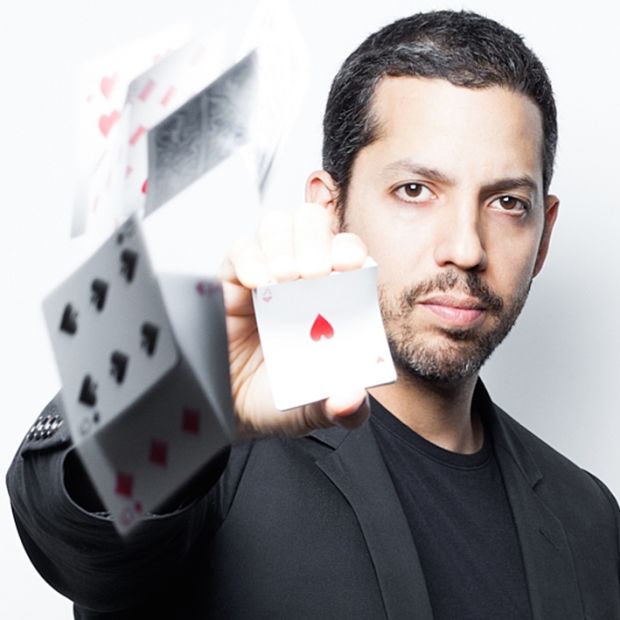
Here is an article that I wrote many moons ago about David Blaine for Magic New Zealand. I actually got some hate mail because I was so positive about Blaine, and his magic. Well, I still love his specials and thought that his full evening theater show was the best I have ever seen.
I was very skeptical about the potential merits of David Blaine when his first television special was being promoted. The fact that Spike Lee was being brought in to edit the promo did nothing to impress me. I did videotape the special though. In point of fact, there wasn’t too much in his special that did impress me. However, after a few moments though I arrived at the conclusion that I wasn’t the intended demographic for the show. Not only was I the wrong age but even worse than that I was a magician. Ah, there is the rub. One thing I did realize instantly was that the special was a very cool concept and a definite breakthrough in television magic. It was a hip extension of what was then a relatively new concept ‘reality programming.’ A form of television I have resolutely hated since it appeared on the scene.
The lack of excitement I felt about the magic Blaine performed didn’t stop me from being highly intrigued by his persona and a curiously low key approach to doing sensational things. It was like a correction in the market. I felt instinctively (and still do) that he had come up with something innovative and fresh that would do nothing but good for the image of magic. The impact that Blaine’s special had on his actual intended demographic audience was astounding though. It was what every non-magician wanted to talk about. He instantly became a topic of conversation across the country. While this didn’t totally surprise me I was amazed at how quickly he made his mark.
What did surprise me, however, was the way that the magic world not only failed to embrace him but moved in such a unified manner to denounce and express their disapproval of him. Maybe they just didn’t get the fact that his demographic didn’t include them. Maybe it was because he made many magicians, even some very prominent ones, look old fashioned and irrelevant. Even Billy McComb who seldom had an unkind word to say about anyone who performed magic used to describe Blaine as some sort of stunt man who had bought a copy of ‘The Royal Road To Card Magic.’
Possibly the major factor in the division between the magic world and Blaine’s true demographic was the fact that he dared to hint at something truly mysterious and possibly unexplainable in his feats and stunts. For a community that still finds it acceptable to use a magic wand when they need to conceal items during the ‘Cups and Balls,’ I find this rather strange. What is our goal as magicians? It isn’t just to fool but to supply a sense of mystery. I know the standard enlightened response is to say; “We are supposed to entertain.” However, there is a heck of a lot of magic being performed that not only doesn’t entertain but which only just manages to fool. No, I think there is truly a need to allow a little mystery into our art and we can’t leave it all to Jeff and Eugene.
If you don’t want to do it yourself then step aside and watch as someone else does. What we shouldn’t do is stand on the sidelines with a knowing smirk and say; “Of course, he’s a fake.” We are ALL fakes: that is the nature of what we do. Worst of all let’s not descend to dismissing something new because it excites the imagination of the non-magician, magic can’t move forward by standing still. Let’s be happy when someone finds a way to create something new under the magical sun. All of the close-up performers who now feature ‘Street Magic’ are moving into new territory due to David Blaine. Rather than look for negatives we should be trying to analyze the things he did that were right.
This is the seventh and final part of this particular series of posts.
1 Always remember the magic mantra “If they can’t see it or hear it they won’t enjoy it.” Your first duty as a performer is to be seen and heard. Billy McComb had a wonderful philosophy in this regard, “Tell them what you are going to do, tell them what is happening as you do it, and then tell them exactly what happened after you have done it.” There is a wealth of real-world wisdom in Billy’s words.
2 When you are giving an assistant instructions about what to do during a trick make sure you do so in a very clear and concise manner. Let him know exactly what to do and how to do it. This shows respect for them and also makes it much more likely that things will go smoothly in the effect. Many onstage assistants are a little surprised or dazed when they find they are under the spotlight, so take the time to show them exactly what you expect them to do.
3 Always have backups available of every prop you use onstage that may break or get lost. You should also have suitable outs available for any occasion that might need them during your show. If you are doing any kind of card trick then an Invisible Deck in a sealed envelope on your table can extract you from a great many problems. Hope for the very best but be prepared for the very worst. Have that round the neck microphone holder ready in case your headset gives up the ghost or starts to pick up the local taxi company!
4 Sorry but the Politically Correct movement does exist and is ignored at your peril. Every single comedian will tell you the same thing; we hate the PC police and political correctness is death to comedy. However, it behooves a comedy magician to be very careful about who he potentially offends when performing his show. Magic is considered a family-friendly entertainment and that should include the “20 somethings” who tend to be the most sensitive to politically incorrect statements, jokes, and actions. I am not going to put up much of a defense for the PC movement—hey I’m an older, white, alpha male, and we are the biggest area of complaints! I will point out that the age range most upset by politically incorrect actions are the most sought after demographic in the television audience. One of the biggest problems is that if we don’t consider this matter sufficiently we run the risk of looking out of touch and irrelevant—a really bad state of affairs. If it is just a matter of a few jokes or effects that are the problem it is usually easier just to cut, change or replace them. The deathwatch beetle in this matter is if you find you are saying, “I have always said that…” Times change and with them acceptable statements, you are not making some grand statement by insisting on continuing using a line that is now considered questionable; all you are doing is creating a potential barrier with an important demographic in your audience.
5 Make every part of the routine you are performing as entertaining as possible. There are many effects that spend a great deal of time building up to a very fast finale/reveal. Keep the entertainment value going for the four minutes that it might take to build up to that 15-second finale, or your viewers might not come along for the journey with you. Add booster laughs and effects scattered throughout the trip. The average attention span of an audience is a lot shorter today than it was a decade ago so it pays to be careful in avoiding dead time. The key phrase used to be “If in doubt-cut it out!” I think in this day and age we should also add “If in doubt-speed it up.” Look at your show and see if you can add a few strong magical surprises into it.
If you have stuck with me for the last seven blog posts in this series, THANK YOU! Here is a little Easter Egg for you. It is the Pre-show video that I put together for my one-man show Comedy Maxim at the Maxim Hotel and Casino in Las Vegas. There are clips and photos from my very earliest years plus tips of the hats to my mentors and heroes.
1 Do your time.To be a good and commercial act you need to know how long your performance is scheduled for and stick to the time. No saying; “The show is killing, I will just keep going,” or “This crowd sucks, I’m outa’ here!” Be a professional and do your agreed upon performance time. The average performer has no idea what other factors may be affected if he is cavalier in his timing. I know of quite a few bookers who are hesitant about hiring magicians because they are erratic in their timing. Keep an extra trick in reserve in case the show is running short and also have a trick towards the end of your act that can be jettisoned if you are running overtime.
2 Don’t take material from another performer’s act. Ever. If someone is doing something in his or her shows exactly as performed on a tutorial DVD and they have bought that video (or product) then they may perform the marketed version as supplied with the purchase. What they may not do is take the extra jokes, bits, and timing that any other performer has added. This rule includes anything you see on YouTube— because it has been posted on social media does not mean it is fair game to steal.
3 Avoid the trap of seeing “how much time you can get out of a trick.” A better policy is to see how little time it takes you to get the maximum impact out of a routine. There are plenty of tricks in magic; don’t be afraid of tightening everything up and adding an extra effect in the space you have created. Always be on the lookout for a way to add an extra double punch ending to any trick, assuming it strengthens the effect and doesn’t weaken what came before. Comedians use the term “going beyond the punch line” for moments when you should have stopped a joke but buried the laugh by saying something extra that wasn’t needed. This is an amazingly easy habit to get into when performing magic. Just because you linked all those darn silver Chinese rings together does NOT mean you need to unlink them at the end of your routine. It may (and in my opinion IS) a better ending to leave them all linked as the great Ken Brooke did.
4 Do not equate how much money you spent on a trick with how long it should play in your act. The same approach also applies to how much time you spent on perfecting a trick. Keep it lean and mean and cut out all the fat. It doesn’t follow that a thousand dollar chair suspension in your kids’ show will get any more reaction than a couple of balloons or a breakaway wand. Adjust the degree you focus on a prop with the interest and energy it creates rather than the impact it had on your wallet.
5 Make sure the audience realizes that you are having fun performing your act. Even if you are bored to tears–don’t let it show. Enjoy yourself and let it show. This is the status quo your audiences want to believe in, so keep the illusion going, even if you are exhausted or have a 102-degree fever. Nothing is more contagious than a big smile and looking like you are having fun.
This is great old clip of Patton Oswalt discussing a magic act he worked with having a road melt down! Patton is such a fine example of a wordsmith comedian!
In the spirit of this blog’s message, I will make this brief!
Eliminate any extra words in your dialogue. Know what you are going to say and then write it down in the form of a script. Next go through that script and then carefully discard all unnecessary words. See how many words can be edited out of your jokes without it affecting the laugh and then ruthlessly cut them out. It requires hard work and discipline to write a really tight joke but it pays big dividends. Be particularly careful to make sure that your joke finishes on the punch line. Burying the punch line is a cardinal sin in the comedy world; make sure you don’t reduce your laughs by running on to long and cannibalizing your own material. Less words almost always results in more laughs.
Professional comedians spend endless hours refining what they say and how they say it to get the biggest response. It isn’t uncommon to see a magician who has spent endless hours perfecting their magic be sloppy or overindulgent in their dialogue. Know what to say and the most effective way to say it. To this end it is very useful to tape record your act and then edit, edit, edit. While videotaping a magic show gives you an excellent handle on the visual aspect of your show, the use of a tape recorder can be a much more useful tool in discovering where your patter needs to be pruned. Be precise.
The following is an open letter on Facebook written by my friend Don Barnhart. I thought it really contained some dynamite advice and with Don’s permission I am sharing it here. It is a lengthy read but VERY well worth reading. Don is a successful comedian, hypnotist and booker—-he knows what he is talking about! Open letter to the comedy community on bookings, paid work and more… (please feel free to share)
I would like to share my opinion on how professional comedians go about getting work as so many of the newer comics don’t seem to understand the right way to go about it.
It’s so basic and simple that it might confuse you. You have to ask for work! That’s it. Nobody is going door-to-door looking for the next great comic so that’s why you need a website, current video and an updated bio/resume with a valid email address with contact info. You also need to promote yourself and send your information out to the bookers, agents, clubs and managers.
About every 4 – 6 weeks, you need to send out this info with your current list of avails to the places you are seeking to get work from. Almost every working comic out there does this and the big name acts and celebrities usually have an agent or manager to do that for them but it still gets done. On the average, I get about 10 emails a week from the major agencies and about 300-500 a week from regular working class comics and I only book one club and a handful of military and corporate shows so you can imagine how many emails and phone calls a franchise club like the Improv gets on a daily basis.
It’s out of sight and out of mind so you need to be persistent without being a pest. Most clubs have a small window when they do book and they might book out the whole year in one sitting. If you’re not on their mind at the time, they can fill the entire calendar within a couple hours and you missed out. Keep in mind, the bookers and clubs have their favorites of tried and true acts so even if you did get on the roster it doesn’t mean you’ll be first pick for dates so you have to be patient…really patient. Now if you’re famous or a draw then a club or booker might seek out your talents for a special event but that’s for the performers that actually put paid butts in the seats.
A word to the wise: Bookers really do pay close attention to your social media and most like to hire acts that promote their shows, are easy to work with and don’t create drama and bad mouth other acts, clubs, bookers, club policy, etc. And they really don’t like it when you trash the acts they do book. If your opinion is so important, go open your own club and book whoever you want to but until then, don’t be an asshole. It makes you sound bitter and if you’re really that great, they would be booking you too.
I hear all the time from comics that it’s the club’s responsibility to promote and that’s true. It is. However, keep in mind if there are 10 equally funny comedians, a club will tend to pick the act that goes above and beyond to help promote and bring more people into the club. The competition is stiff out there so you really have to be honest and ask yourself what are you doing to separate yourself from the rest of the heard? Are you a utility player that’s interchangeable and just taking the work, filling the time, draining the bar, insulting the audiences and/or trying to impregnate the wait staff? Are you pleasant to be around or are you a nasty person with a bad attitude that creates a toxic environment that nobody wants to deal with?
Take a really close look at your calendar. If you don’t have the work you want, it’s time to ask yourself what can you do to get it? Are you sitting at home bitching about how funny you are and wondering why the clubs are calling you? When’s the last time you dropped into the club to say hi. Are you doing the same old material or writing coming up with fresh ideas? Is your deliver boring? Are you learning how to perform better? Are you improving in every way that you can? Are you taking acting, writing or improv classes to improve your stage presence? Are you taking a meditation or yoga class or going to a therapist to at least improve your outlook on life? Are you toxic to be around? Is it your act, your attitude or a combination of both? I find it sadly hysterical when I hear local acts complain that they we’re not “invited” or “they’re not going to beg for work” and this is not just the Vegas scene but it’s happening in every city across the country. You actually have to go out there and ask for work and put your info out there. There are far too many talented acts with solid credits, experience and references that are emailing clubs with their avails so how in fact are you better than them? If you’re not being “asked” to perform maybe it’s time you sent the booker a new video or ask to do a live showcase and show them how much better you’ve gotten since the last time they saw you instead of sitting around complaining or bad mouthing them about not calling you and seeking out your talents. Maybe you just didn’t impress them the last time they saw you. But that’s only a temporary condition if you really are good.
Bookers love to see comedians that are constantly working on their acts and growing and know that everyone starts at the bottom. If you really are that good they’ll WANT to hire you. We all want the best show possible. Anyone telling you different or that your too good or the headliner doesn’t want to follow you is blowing smoke up your ass trying to justify why they and you aren’t getting booked. It’s just another excuse to blame everyone else but themselves. Do you have any idea how stupid it would be to say, “Oh, yeah. You’re so good we don’t want to book you. We would rather have lame acts”. This is a business so great acts keep audiences coming back. Bad acts with even worse attitudes get cut as nobody wants to work in a toxic environment. The audience is listening and so are the bookers and we can tell when an act is just walking through their material and just phoning it in.
You want work? Bug your local club and ask for guest sets so you can work out and get better until they want to hire you. Make yourself invaluable to the club until you get your shot. Offer to help seat the room, clean up after a show. Do anything you possibly can so that you’re there every night in case there’s a fall out or if someone’s running late. (That doesn’t mean go to the club, hang out and drink the green room dry) If someone doesn’t show, you might get a chance to fill in and save the day. Oh, is all of that beneath you? Then go ahead and sit at home and wait for the phone to ring.
Now, if you’re not getting the work you want it’s usually one or two things. Your act isn’t as good as you think it is or your personality and offstage behavior is not what others want to be around. In some occasions it’s a combination of the two. When you tell people how great you are or that you’re a seasoned headliner but you have no work to back it up perhaps it’s time to reevaluate your place in the comedy community and go get better, not bitter.
Most comedy clubs book 3-6 months in advance some even book out as far as a year so that way the comedians can route their travel. As for myself and most bookers out there, a reference can go a long way to get your foot in the door and your info to the top of the pile but they still want to see your resume and a link to a video so they know they’re getting a professional comedian and not an amateur, a glorified open mic-er or a guy that can get you really good weed. Asking to do a guest set or showcase at your local club is even better and most comedy clubs are open to that or run an open mic or showcase night. Vegas being the exception as most of the comedy clubs have a limited amount of time so they rarely do showcases.
This is one of the reasons I started the Monday Madness Showcase at Jokesters. It’s a chance to showcase acts that I may not be familiar with or haven’t seen for a long time. It’s a chance for them to be considered for future paid work, give them quality stage time at a professional club, to help them grow and to get a better demo so they can go out and get even more paid work from other clubs. It’s not an open mic so if you want to do a set, send me an email with your avails, any new info, where you’re working, references and link to a recent video. Even when you email a booker your avails, they may not get back to you right away as they’re booked out and don’t have time to reply to everyone seeking work. That’s why it’s important to follow up and send your avails out every 4-8 weeks or sooner if your schedule changes. Don’t get mad and bash the club, booker or venue if they don’t get back to you right away just keep them posted on what you’re doing, where you are working or any new credits you may have. Give them a reason to want to book you. For some clubs, it may even take a few years to get you into their rotation, as there are a ton of talented and seasoned comics that kill every night so they may not be ready to take a chance on someone with less experience or a bad attitude. Can you deliver the goods each and every night in spite of the size or demographics of the audience? I’ve seen far too many acts that do 1 decent show out of a full week and then wonder or blame the club as to why they’re not getting booked back.
Bashing the talent a club does choose to book doesn’t go a long way to move you up the ladder. It just makes you look bitter. Other bookers may take notice and might not want to hire you either. If you think comics talk, bookers talk even more and want to protect themselves from hiring a potential nightmare act or someone who is going to turn on them if they don’t get what they want. You might be funny but they don’t want the headache, as there are far too many great acts that are easy to work with. Besides, if you’re opinion is so valid, go open up your own club and then you can hire whomever you want to but until then, you have to play nice.
Are you scared someone might say no and crush your dreams or overinflated sense of comedy genius? Welcome to the club. Get over it and send your info anyway. If a club doesn’t hire you, you can always ask why but you better be prepared to hear the truth. I see too many comics that don’t ask why they’re not getting book and choose to blame the club or booker and even worse I’ve seen other comics go ballistic when told the truth. Maybe you’re just not really as good as you think you are. Maybe you’re not the right fit for the club or the club was already booked up. If you don’t get booked right away, wait a bit and send in new stuff. Rinse and repeat and keep doing it again and again and again. Get better and resend your stuff. Set up another showcase. Don’t go off in a huff, get all pouty and trash the club or booker because the comedy world didn’t open up and say, “Come on in, you’re the one we’ve been waiting for.” We all have to pay our dues but if you’re doing the same act and not getting better or booked, maybe it’s time to change it up.
There is no club, booker, agent or manager in the country that wants to book a bad act and we all want the best talent we can afford. I am flooded with emails from professional comics that work 30-40 weeks a year that want to come to Vegas but I’ve only heard from a few Vegas acts actually asking for work and I read a bunch more about how they’re overlooked. Nobody goes to McDonald’s looking for a steak. You, the talent have to actually go to where you want to work and seek employment, it’s doesn’t work the other way around. A local guy I hadn’t seen in awhile recently emailed me and asked to do a set to show me what he’s doing. He came in, did great and got booked. It’s that simple and that’s how the business works. If you’re funny and not an asshole there’s a good chance you’ll get hired.
Don’t complain about the acts that are getting booked and paid. Maybe it’s time you should go out and watch them and see why they’re getting hired and you’re not. Model your behavior after successful people and ask them for help, advice or what it is that you can do to get better. Network and learn from each other.A great case in point is The Ice House. On their comedian submission page they put it bluntly. “We will only reply and contact you if we have work available for you.” That’s it. No reason just if they have work available. Took them a few years to get back to me and then they did, they finally gave me headline weeks. I didn’t trash talk and bash them in the mean time, I just got better so I was even more prepared. Now, if you’re interested in being on our Monday Showcase, I encourage you to send me your info at bookings@donbarnhart.com If I don’t get back to you right away, follow up in a few weeks. I wish you all success in your journey. Don Barnhart
One common fault when watching comedy magicians, who haven’t had a chance to perform enough to perfect their craft, is that the pacing and general tone of their act does not vary enough. It is not uncommon to see a performer find a pitch and pacing for an effect and then repeat it for every trick in their show. It is just as common to see a show where every trick runs about the same length. This kind of thing certainly achieves a kind of consistency but really can make for an uneventful show lacking in true theatrical impact. While consistency in your performing persona is a sign of assurance it is just plain boring to be repetitive in what you do with your material. I have seen performers present several routines in a row that require bringing assistants onstage–this becomes a crutch. A little re-thinking and adjusting the running order might make the show a lot more interesting and less formulaic. Maybe for one of those effects that requires bringing assistants onstage the performer could go into the audience and perform a trick front of house. Breaking the fourth wall in this manner would be a surefire way to add texture and variety to the show.
In a well-balanced show you need to add texture and dynamics to paint a truly vibrant picture. Some effects need to be longer and some shorter in order to keep the mix interesting. Not every effect can be “killer;” you need to manipulate your running order to maximize the effect of each item. In a fancy dinner they often serve a sorbet between main courses to cleanse and refresh the taste buds and you can do the same in your show. Variety is the spice of life, and this applies especially well to a variety act! Look at the tone and approach of each effect and make sure you are not falling into the trap of being repetitive in tone or content. Shaking things up visually, verbally and mentally quite simply make you a better and stronger performer. If you talk a great deal in your show it could benefit you greatly to perform an effect that is silent or backed just by music. If you perform wacky comedy then perhaps one more serious effect can create a contrast that will heighten the impact of the lighter material.
This concept of texture and dynamics is a somewhat more abstract idea than is generally discussed in articles on comedy magic, however, in my opinion it is a vital one to consider. There is a great deal of emphasis placed in magical theory on Robert-Houdin’s quote, “A magician is an actor playing the part of a magician.” While valid on a certain level I feel this statement needs very careful re-examining. I think it has lost something in the translation, and often seems to lead to an element of self-importance and preciousness entering into a performance. It is more important to be a good magician with a strong act than a half assed actor. Let’s balance Robert-Houdin’s quote with a little Shakespeare; “The play is the thing!” It is no good working at being an actor unless you have a worthwhile vehicle to act in. Focusing on texture and dynamics is a splendid way to turn an act into a genuine performance and before you know it you end up with an arc and a subtle storyline to improve your show.

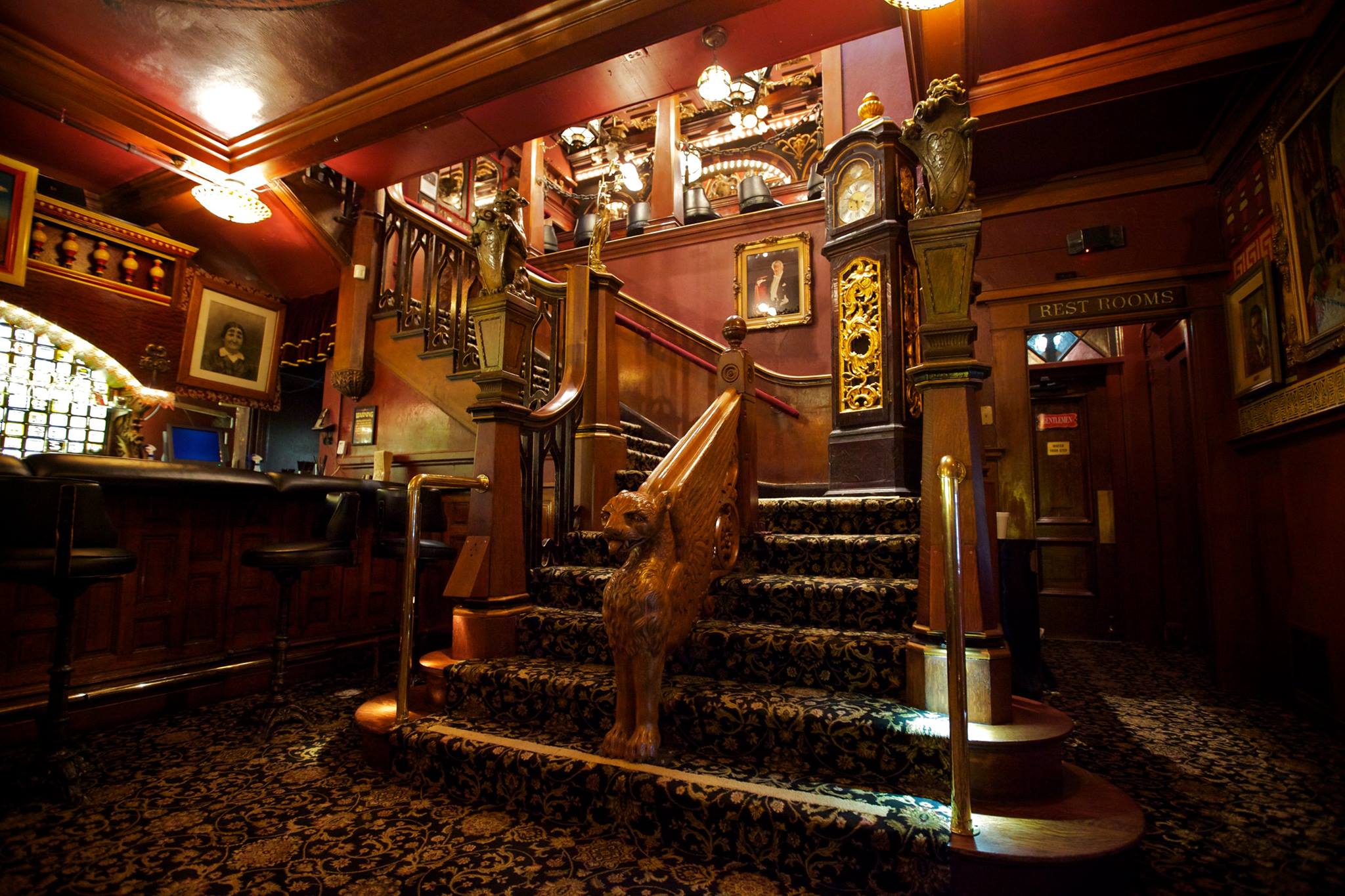 library to see what was happening there. There were two ways to navigate this particular journey; one was via the grand central staircase with its imposing grandfather clock. The clock was widely rumored to have stopped at the exact minute Jay Ose had shuffled off this mortal coil; actually I heard several names mentioned in this connection, but most frequently it was Mr. Ose. However, generally my preferred route upstairs was a detour that involved a short cut through the kitchen that allowed me a brief sojourn in the little room that housed Prof. Dave Bourne. Bourne was the genial bearded ragtime pianist who brought Irma to life on most nights. Dave was a Kenny Rogers look alike and the kind of man who
  improved any day just by spending a few minutes in his company. I spent many happy hours in Dave’s anonymous little hideaway eavesdropping on guests as they requested their favorite tunes.
















 REMARKABLE MAGIC