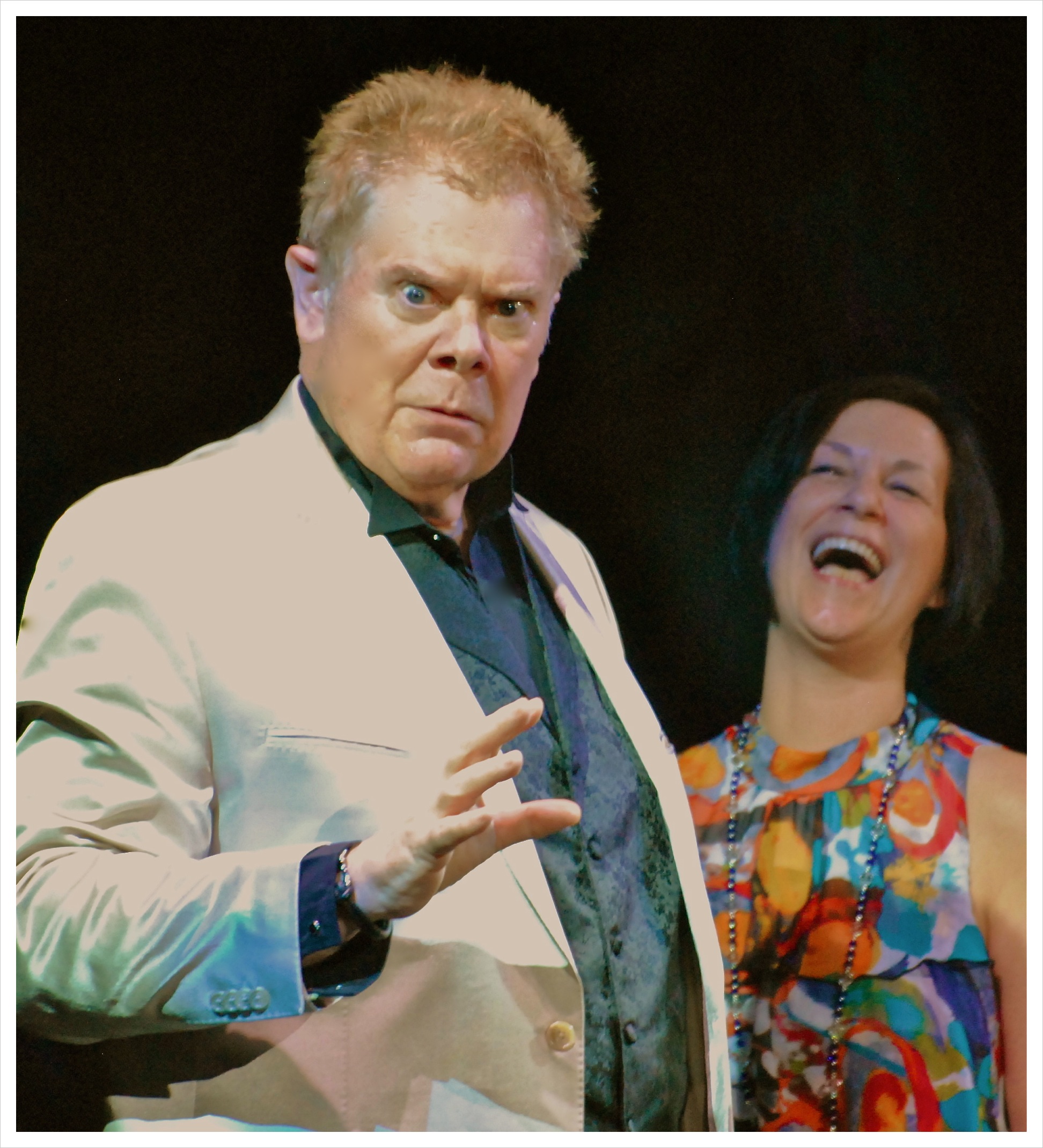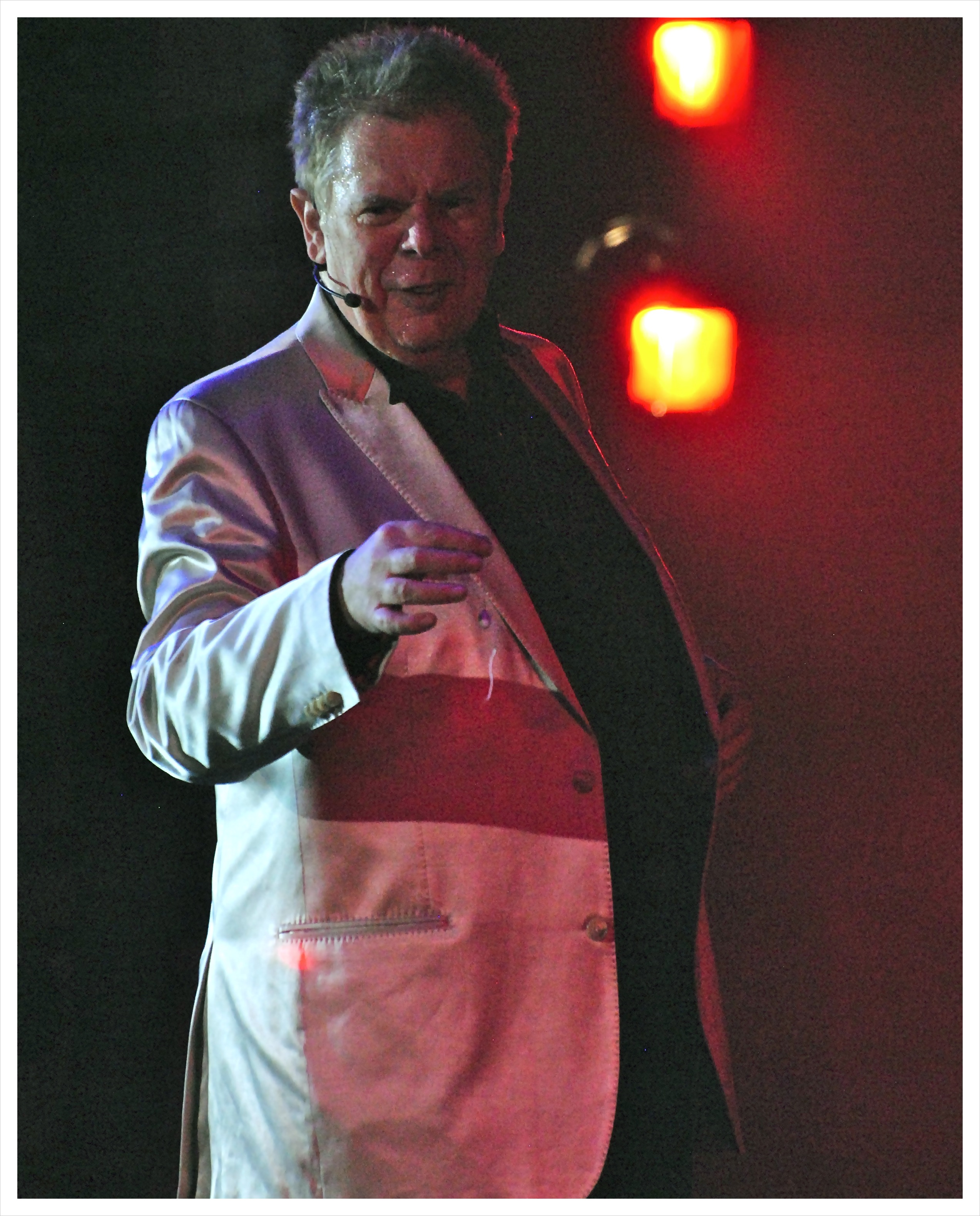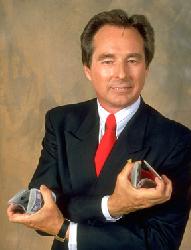
The Funniest guy I know—playing in Vegas and I’m in Europe needing a good laugh! Grrrrrrrrrr.

•August 31, 2011 • 1 Comment

One of the questions you get asked a great deal when you are a comedy performer is, “Who is your favorite comedian?” or “Who makes you laugh?” Well, non-performers always expect you to say, “Jerry Seinfeld, Robin Williams” or “Jay Leno,” or someone they see on TV all the time. I always disappoint them by being much more individualistic in my response, it kind of upsets some people if you name someone they haven’t seen on the ‘telly’ ad infinitum.

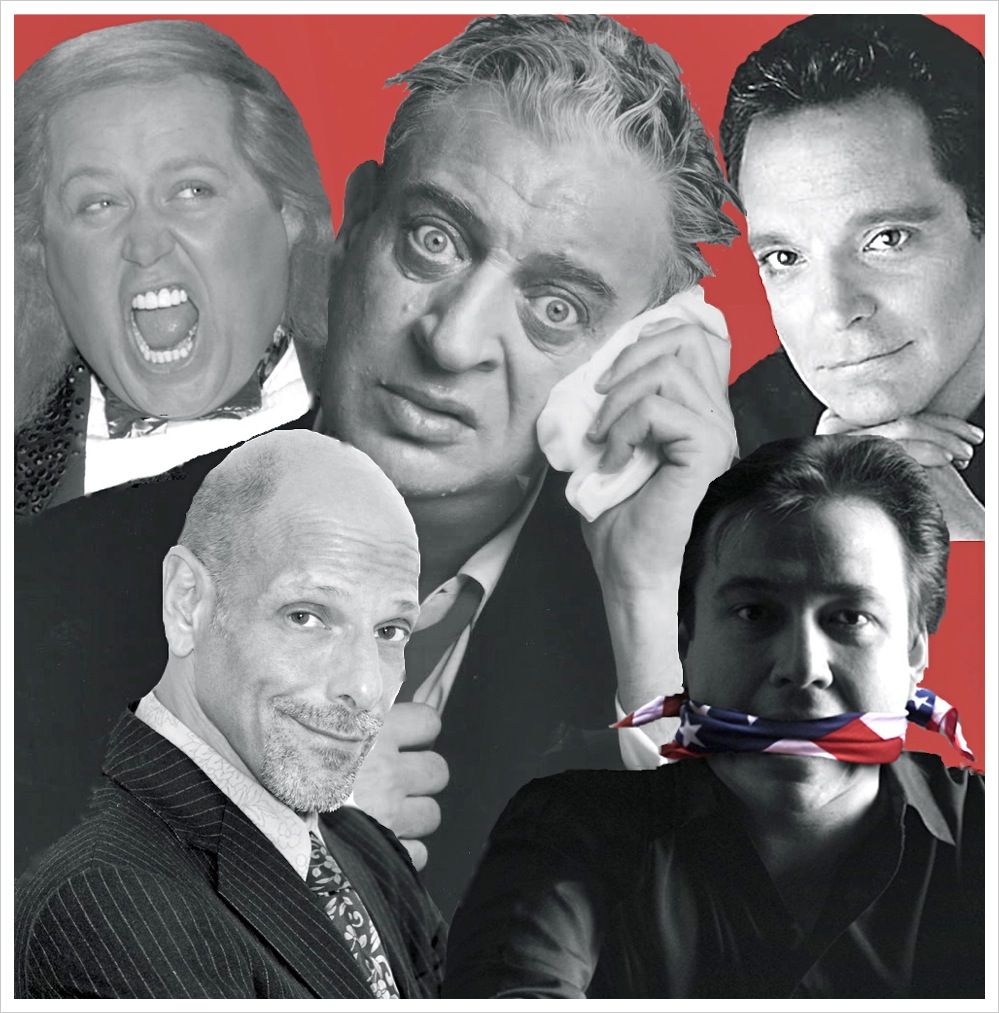
The most famous people on my list include, Andy Kaufman, Bill Hicks, Lenny Bruce, Rodney Dangerfield and Robert Schimmel. Actually there are one or two comedians who make me laugh who are still living! Bobby Slayton always makes me laugh in seconds flat and keeps me roaring ’till the end of his show. However, the man who makes me laugh the most isn’t on this list (which has probably pissed off many of my good friends) it is Jeff Wayne.

If you have never seen Jeff work then you have missed a treat! Of course I am slightly biased because Jeff has been a close friend for over 25 years now, however there are many other people I’ve known that long who don’t reduce me to a quivering mass of laughter. What does help in knowing Jeff so well is understanding what an encyclopedic knowledge of comedy and showbiz he has, he is truly brilliant. OK, I really don’t get the Jerry Lewis thing but………different strokes for different folks. 

Among his many other accomplishments, Jeff created a one-man show, ‘Big Daddy’s Bar-b-que’ that allows his brash stage persona to be subtly interfaced with the ‘other’ Jeff. It is a masterpiece of comedy theatre and deserves to be seen by everyone who loves comedy.

Well, I am very sad this week. My favorite comic is working in my home town and I am out in Europe unable to see him perform. Grrrrrrrrrrr. I want to give a shout out to all my Las Vegas friends so they can catch this one of a kind performer. He is appearing at the ‘Riviera Comedy Club’ at–you guessed it, the Riviera hotel in Las Vegas.

‘Big Daddy’ Wayne is billed as a ‘Troubled Man for Troubled Times,’ and that pretty much is a perfect description. Jeff performs with an unabashedly right-wing agenda while I am so much a ‘lefty’ that it never fails to amaze me how often our extreme positions meet in the middle and coincide! My favorite line in Jeff’s show is, “People ask me if I believe in the electric chair? I believe in electric bleachers!” Well, while I’m no great fan of capital punishment but I love his enthusiasm and can think of a couple of bleachers full of people we could kick of the new system with. Damn, maybe I’m not as far to the left as I like to think I am.

The structure and wording of Jeff’s comedy make him an object lesson in how to get an audience laughing and keep them there. He is totally original and one of the finest comics to work our generally rather hack city. Go on and catch him, you won’t regret it and God knows the Riviera needs the revenue. Go up afterwards and say, “Hi from Nick.”     


Al Koran. A GREAT new book!

•August 30, 2011 • 2 Comments

It is no secret to my readers that I am a huge fan of the late Al Koran. When I play the “I wish I had got to see xxxxxx perform live….” game, Koran is always the first man on my list. No one even comes in a close second.

For many years, the two classic Koran books were the chief source of information for those of us who were trying to learn the secrets of the master. Wonderful information, advice and routines were contained in those two slim volumes. They are still valuable and beloved residents in my bookshelf.

Recently my friend Martin Breese has done a wonderful job in updating the available reading matter on this iconic performer and magical innovator. Breese must be really thanked by the magic community for his recent additions to our knowledge and understanding of Al Koran. He has added another classic book to the available treasure trove.

I was delighted when Martin was kind enough to send me a PDF of his latest publication; I have found it to be a particularly fascinating volume. It gathers some rather obscure and extremely interesting material and turned it into a must-read book for fans of Koran. In fact, even if you have never had any interest in Al Koran because of his identification with mindreading, buy the book anyway—you may be in for a surprise. Don’t forget Koran was the man who created the basis and framework for Ring Flight! Before he became an almost instant star as a mentalist, Koran was a very sophisticated and accomplished sleight of hand/close-up performer.

This book collects routines and effects that have previously only seen the light of day in magazines. What they really demonstrate is what a powerful tunnel vision Koran had for the structure and subtleties that can create a miracle. His ability to simplify an effect and maximize its impact reminds me of a diamond cutter taking something precious and transforming it into something as close to perfection as possible.

The magazines that these particular gems were culled from include, ‘The Gen,’ ‘The Wizard,’ ‘The Magic Wand’ and ‘Pentagram.’ I particularly enjoyed one particular series of columns for ‘The Gen’ called ‘Kard Kolumns’ in which various moves are detailed and then a trick involving them is added to the mix.

It should mention that not every trick in the book was originated by Koran himself, however his selection of material is enlightening all on its own. When you are sharing slices of the mind of magical practitioners like Alex Elmsley this is not a negative point!

One entire section of the book contains many of the commercial effects that Koran released under the auspices of Harry Stanley’s Unique Magic Studio in London. A great deal of scholarly work went into patching these various instructions and manuscripts into a form suitable for release as a stand-alone book. The final section of the book details two routines that Koran released, after his relocation to America in 1969.

I really enjoyed the highly personal and fact filled introduction to the book by Peter Zenner, which does much to fill in the personal legacy of this remarkable man. It goes a long way in revealing the real ‘taste’ of the man born Edward Charles Doe, who carved out a unique spot for himself under a new name. Did you know Koran performed a magical/musical act entitled ‘Song & Sorcery?’ I didn’t; and I found this a fascinating piece of information, especially given the reason why.

Since receiving the manuscript I have taken the time to learn and perform several of the routines from this book and can report that they are pure gold. This collection has released great new/old material and is a true cause for joy for the performing magician.

Fans of the Great Koran will enjoy a video clip in one of my previous blog stories ‘A treat for Mind Readers.’

The full details of the publication are as follows,Al Koran: The Unique Years * Compiled by Martin Breese * 6.5” x 9.5”, hard bound, 200 pages, illustrated by Phil Shaw * £27.50 plus shipping * Martin Breese International www.abracadabra.co.uk

Bruce Cervon, The King of Cool.

•August 29, 2011 • Leave a Comment

This is a column I wrote about the late, great Bruce Cervon for The Linking Ring . I found it in my files the other day and it ran as true as the day I wrote it. I also want to point out that there is a little gem in Bruce’s book ‘Card Secrets of Bruce Cervon that you almost never see; his Pivot revelation. There are several great variations in the book. Well worth checking out, especially the version that ends with the Royal Flush.

Bruce Cervon: The King of Cool.

 Magic has suffered a huge loss with the death of Bruce Cervon: not just the loss of one of our finest and most influential performer/thinkers but a great deal more. His intense love of magic was so deeply ingrained in his performance that even a lay audience knew they were seeing something very special.

 The many layers of Bruce Cervon wrapped up truly unique person. The term ‘A scholar and a gentleman’ is tossed around a great deal and often used in a joking manner but with Bruce it comes close to getting to the heart of this surprisingly shy man.

 When I first met Bruce Cervon, in the  mid-70’s I found him just a little intimidating. For a start there was his act; which was about as perfect as any close-up I had ever seen. Then there was the classic Cervon cool. He pretty much made Clint Eastwood’s Dirty Harry look like an awkward high school kid. I was therefore pleased when I was booked to perform with him at a promotional event in a Los Angeles saving and loan bank. It seemed to be a splendid chance to get to know him a little bit.

 When I arrived at the gig I was surprised to discover that Bruce was not performing close up magic at the show but was hosting and performing in the stage show. The opening of the show featured two dancing assistants who flourished silks that turned into canes as they shouted, “Here’s Bruce Cervon” and there he was.

 To my surprise Bruce was a superb stand up performer. Not only did he perform a couple of illusions, but he also floored me with one of the most commercial comedic stand up routines I had ever seen. The effect he performed was a slick blend of the 6 Card Repeat/Cards to Pocket. I consider his hybrid of these two classic tricks to be a gem of contemporary magic.

 His performance also featured a variation on the Kaps notes that seemed totally impossible to me– and I had learned the trick from Fred Kaps himself. The changing of the paper to bills was instantaneous and totally impossible. It just blew my mind. To be honest I still have no idea how he did that trick but that’s Bruce Cervon for you, as close to perfection as any magician ever needed to be.

 During the course of the afternoon Bruce and I began to chat and we discovered that we had a mutual interest in music and our rather extensive record collections. Bruce suggested I drop by one afternoon to explore the gems in his collection. I happily agreed.

 I ended up spending quite a few afternoons at Bruce’s home and enjoyed listening to his erudite and entertaining run down of American popular music. One thing the two of us never did was talk about magic. I guess many people lucky enough to spend time with Bruce would dream of coming away with a new double lift. I was overjoyed to leave his home having discovered Mose Allison. The album of Mose that Bruce gave me is still in my collection along with many others I have acquired over the years.

 A few months later I was booked on another ‘Savings & Loan’ show with Bruce but this time we were joined by Scottish master magician Ron Wilson. I told Ron about the mysterious manner in which Bruce could perform the Blank Paper to Dollar Bills without any of the usual folding or covering of the paper. I was determined to discover how it was accomplished this time.
 When Bruce performed the trick Ron and I were both watching intently. He fooled us both completely. There were six more shows and Ron and I managed to watch the trick six more times from six different angles and positions. We went up to the second floor of the bank building and watched, we stayed backstage and watched from behind. However by the end of the engagement we were no wiser to Bruce’s methods.

(New note……..check out the amazing ‘Extreme Burn’ video which my friend Peter Samelson, introduced me to. It has the identical effect and is just eye-popping magic.)

 Much of my previous words are taken from an article I wrote last year for my weekly column ‘Meetings With Remarkable Magicians’ in the Magic New Zealand ezine. I usually get a lively email response from my pieces and I always look forward to reading the notes I receive. I often learn a great deal from them.

 I was particularly pleased at a note I received from Bruce in which he said he always read my pieces and had enjoyed my column about him. Other emails filled my Earthlink inbox and were something of an eye opener to me.

 Magicians from all over the world wanted to share their stories about Bruce. Most of the people writing were not the high flying and famous magicians we see on the covers of magic magazines. These were the magic lovers who fly low enough in the magic world that they escape the radar. In fact some of them flew so low under the fame radar that they probably stopped at traffic lights.

 These emails had a great deal in common. They were all from true lovers of magic and they all seemed to tell the same story.

They came from people who had been truly touched by the sincere way that Bruce had interacted with them. These magical enthusiasts and hobbyists spoke of times when Bruce had taken the time to share his time and knowledge with them. To their amazement this legitimate superstar of magic had gone out of his way to make himself available to them.

 Each story was a little different. Sometimes it was when Bruce would sit down and take the time to really teach them a routine or a move. Some people had stories that touched on the other facets of Bruce such as his love of music. Each person had been lifted to a new height by the way Bruce had generously shared his time.

 As I read those emails I received I wondered how many other times similar incidents must have occurred. I would guess it was a very large number indeed. Here is someone who truly loved magic and the people who performed it. Cervon not only devoted his time to magic but also to the people who performed it,

 Over the years my wife Susan and I were lucky enough to get to know Bruce and Linda Cervon and their daughters Kellee & Marcella a little bit. I never asked Bruce to teach me the ‘work’ on the Kaps Notes. He taught me a lot of other things though such as balancing work and family and not giving short shift to either one; and that is the real ‘real work.’

Bruce also introduced me to Mose Allison and eating a Monte Christo sandwich covered with jelly: for this and more I am very grateful.


Great Street Art (OK, Graffiti!) from the Berlin Wall……

•August 28, 2011 • Leave a Comment

For the last ten years I have really enjoyed the opportunity to photograph graffiti as I travel the world. I now have an enormous collection of photographs of Street Art from around the World and I am trying to put them into some kind of relevant and consistent format to publish in prints, book form or perhaps as an iApp. There is a fascinating combination of artistic and political statements combined in the better work.

It is not easy to decide exactly how to classify these various works of art. Yes, I definitely use the word art in connection with them. Not all graffiti is art–some of it is just an annoying  eye sore, however much of it is fine art of a bold new school. I like to define graffiti as vandalism when it is scrawled on your wall but potentially art when it is on someone else’s wall!

One of the joys of my crazy World travel is that I have been able to visit quite a few areas on repeated occasions and watch the progress of the various pieces of street art. I have been able to record and document the mutation/evolution of individual ‘canvases’ (OK, walls) over the period of many years. Sometimes the original work is improved but usually just defaced with names and slogans. Sometimes you return and the entire wall has been painted over in a uniform color. Sometimes the entire wall is gone!

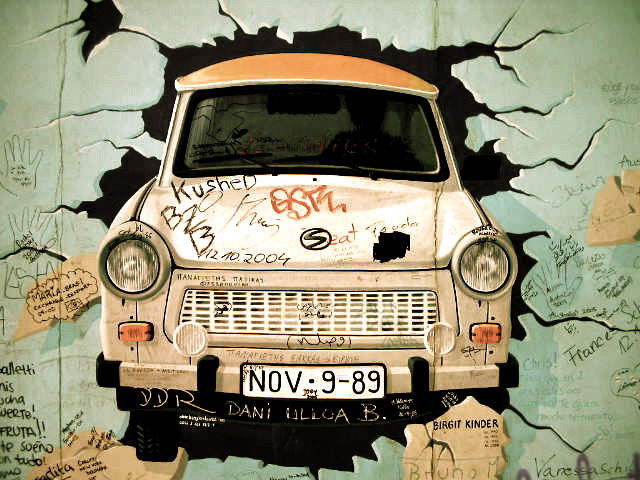
Some of my very favorite pieces of street art illuminate what remains of the Berlin Wall. As you can imagine there is a distinctly political edge to the rapidly dwindling original artwork in this location. In my opinion a devastating lack of attention has been given to these unique artifacts. If you want to see the best of what’s left, during a visit to Berlin, take a cab to Space Beach a unique riverside beach style counter culture site. Even if you don’t have any interest in Graffiti I highly recommend a visit to this fun spot.

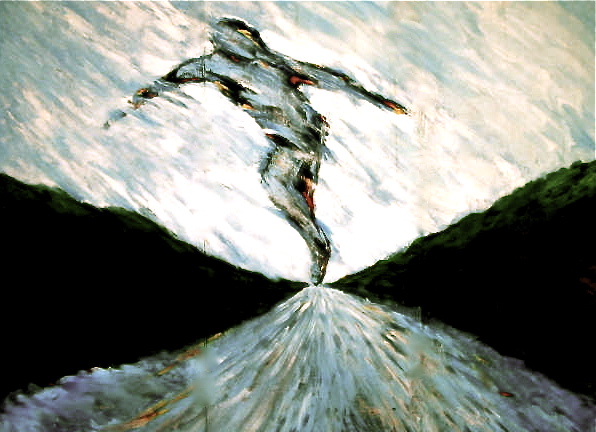
I want to highlight three of my favorite pieces of graffiti from the Berlin Wall, at least one of them has already been lost. What a shame! I won’t go into the historical details that accompany these pictures. If you have an interest in those kind of details then go ahead and bug me to finish my book! If you have an interest in the general field of Graffiti then I heartily recommend viewing the DVD ‘Exit Through The Gift Shop.’ It is a fascinating ‘documentary’ about contemporary street art and it’s potential commercial exploitation. The movie is well worth seeking out—in fact it is probably available for free viewing on the ‘Snag Films’ website or even Netflix. 

Thanks to McComb, Comedy Tips (part two)

•August 25, 2011 • 2 Comments


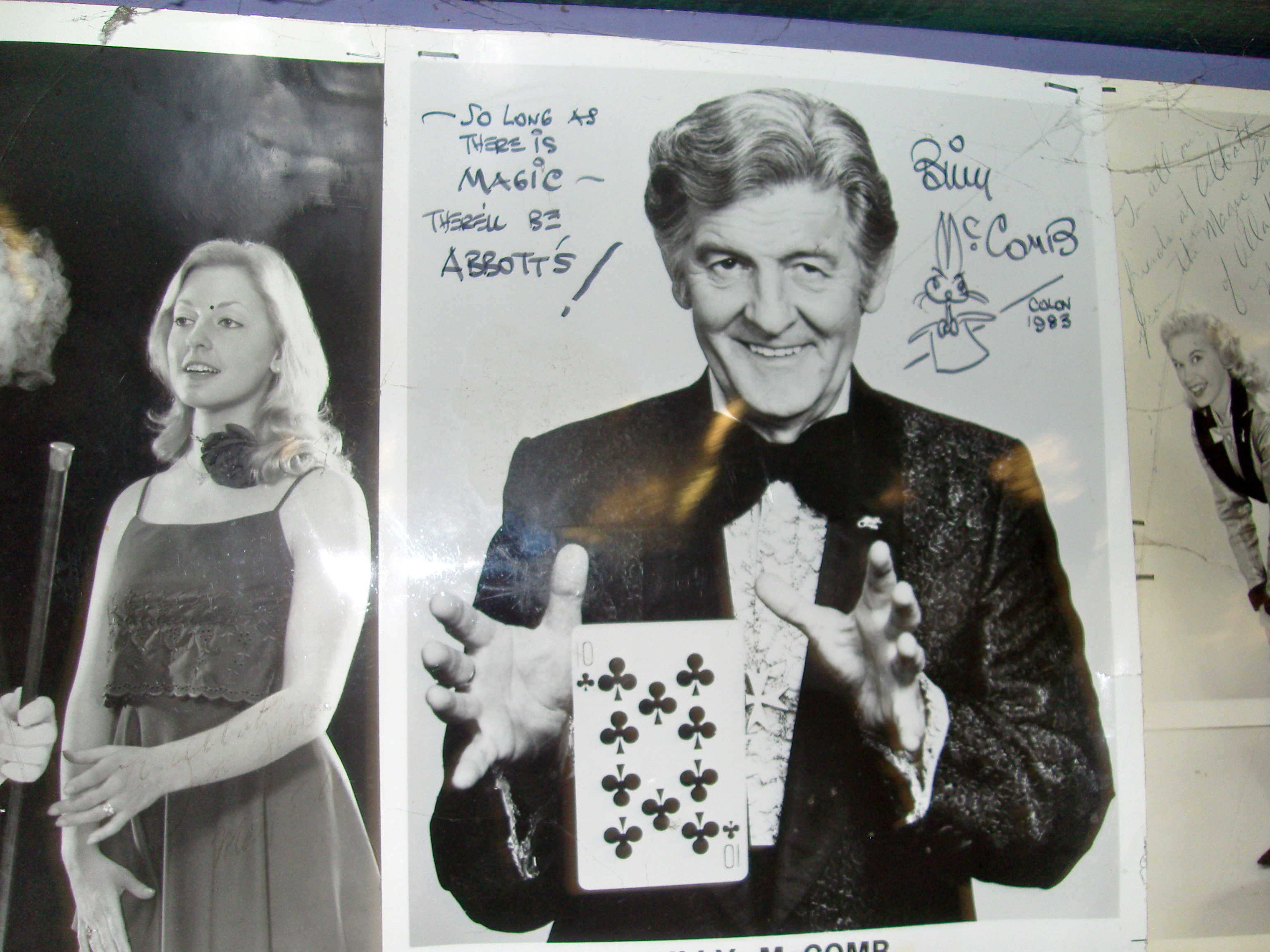
Here is part two of my article about the way Billy McComb helped me add the laughs to my act.

One thing I learned very quickly in the comedy circuit is how little respect the average magician and juggler receive from comedians. By the time I had started to learn the ropes I had begun to understand why this was the case.

Comics, generally speaking, think that magicians utilize stock lines and get away with stale material only because they have the magic to save their rear ends. It is certainly true that people tend to laugh during a magic show simply because they realize they are supposed too. I call this the “Patter Syndrome.”  Just what the heck is this thing called patter that pops up so often in magic literature? The dictionary defines it as: ‘Meaningless empty chatter: to speak rapidly and glibly or to repeat something quickly in a mechanical way. When a comedy magician wants to give a stand-up comedian a run for his money, he must throw away his ‘patter’ and in its place use words that are well chosen and conscious, and don’t even get me started on heckler stoppers!

Comedians spend a lot of time working on their character, which (believe me!) has nothing to do with improving any ungentlemanly or lady like traits. What they are doing is making sure they don’t sacrifice their performing persona just for a fast laugh. Comedy is only real, then, when you are.  Once the audience thinks that they know where you are coming from and who you are, then the comedy takes on an extra dimension.

I could go on telling you my thoughts on comedy, but I have a better idea. I want to continue by sharing some tips Billy McComb taught me over the years about performing comedy magic.  Billy had a secret prop and it is one you can’t buy in a limited edition, sterling silver version from the Joe’s Porper or Stevens.

McComb used a small digital tape recorder that fitted into his top pocket and he audio-taped almost every one of his performances. After each show he would listen carefully to the recording and make note of what worked and also how to make it work even better.

While listening to the recording Billy applied the Bob Hope rule. If there isn’t a laugh every thirty seconds then there should be.  This is one of the reasons that Billy worked well into his eighth decade and was able to open shows for Amazing Jonathan in Las Vegas into his eighties winning an audiences of crazed A.J. fanatics.  These were the kind of audiences were would give short shrift to most contemporary performers, let alone someone who looks like their grandfather.

In the age of videotape it is easy to forget how effective it is to concentrate just on your words and the audience reaction to those words.  In McComb’s case it was astounding how little you really needed the visuals while listening to his show. Billy had a simple rule, he told the audience what he was going to do, he described it as he did it and then he told them what he had done after he had done it.

Sometimes when people are laughing they don’t pay as much attention to the tricks as they might desire. This is such a simple technique that it’s almost impossible to grasp how effective it is until you try it for yourself.

One other practice that I’ve learned from Billy is keeping your jokes in a particular sequence and attaching them to specific tricks. This is a great way to keep your comedy fluent and yet consistent. It is tempting to think you can shift hunks of comedy around in your act, moving them from trick to trick. However it isn’t nearly as easy as it seems. It is much more effective to keep those comedy building blocks separate and solid.

When you get a sequence right, keep it that way. Many of Billy’s props had a list of punch lines written on them. Just knowing the list is there allowed him to relax and concentrate on his real job, which was telling jokes.  It enables you to relax and make things look effortless.

A reporter once asked movie star Gary Cooper about his technique as an actor. Cooper replied: “ Acting is great, just never get caught doing it.” It’s the same with comedy, make ‘em laugh but just don’t get caught doing it. The funniest jokes are the ones that seem to happen on their own. This is comedy 101.


Thank you, Billy. You were the Godfather of Comedy Magic. Without you I wouldn’t be the comedy magician I am today: in fact I might even have ended up as a chartered accountant, and that would have been no joke.


Thanks to Billy McComb, the King of Comedy Magic (part one)

•August 24, 2011 • Leave a Comment

People seemed to like my short (really short!) post on comedy the other day, so I wanted to share a piece I wrote about Billy McComb and his contribution to comedy and magic. This is part one…………..

I ultimately planned on becoming a comedy magician just after I decided not to follow in my father’s footsteps as a chartered accountant. It really wasn’t too tough a decision. I loved magic, and when it came to numbers I could make one and one add up to three quicker than a quantum physicist.

Growing up in post war England made being a comedy magician seem like a logical choice. With logic like that maybe I should have been a quantum physicist! Now, being an entertainer is my life but I have no real way of proving it.

One of the best parts about being a young magical devotee in London were all the great comedy magicians you could watch, absorb and learn from. As you are probably beginning to realize nearly everything I learned about comedy magic came from two people: Ken Brooke and Billy McComb. I don’t think you could find two better or more different teachers.

I want to take this opportunity to share some of the insights I learned from Billy McComb. They have shaped me into the performer that I finally became, after I realized I could never become Billy.

You have never seen a comedy magician take his comedy as seriously as Billy did, he gave the comedy in his act the same meticulous attention he gave his magic. Billy’s timing and delivery of a comedy monologue was that of a comedian, not just a magician with time to kill. His casual asides and offhand delivery were as precise as a Johnny Thompson dove steal.

There is no question in my mind that, but for his love of magic, Billy could have been one of England’s top comedians.  Billy has noted Jay Marshall as one of his inspirational mentor so maybe it‘s no coincidence that this same statement applies to Jay in the United States.

Before we talk about the McCombical approach to comedy, let me give you some of my ideas on comedy as it applies to magic. Having made a comfortable living for over thirty-five years performing comedy magic I’ll state one thing upfront: the comedy is tougher than the magic. It can take years to perfect a trick, but you might never learn to be funny.

There are no books that teach you the ABCs of being funny and it makes no difference how long you practice in front of a mirror. Only by performing to a live audience can you improve your laugh ratio and even with copious experience this doesn’t happen automatically. Along the way you need to take a lot of notes and then you have to put the notes into application.

If you want to save time and effort and be funny, it is much easier to be a humorous magician than to perform stand-up comedy. A humorous magician is someone who lets the situation create the comedy and then comments upon what happens.

Monologue comedy is a much more exacting mistress. A stand-up comedian chooses and uses his words with the same care a surgeon utilizes in choosing where and what he cuts.  Cut being the operative word. After fifteen years headlining in comedy clubs I can assure you the way comedian’s improve their acts is by cutting out unnecessary words.

The great Henny Youngman demonstrated this to perfection when he said: “Take my wife, please.”  He packaged a set up and punch line into just four words and ended up with a trademark joke that will live forever. Brevity is truly the source of all humor.


A wink is as good as a nod to a young magician…….

•August 24, 2011 • Leave a Comment

At age thirteen I had been performing magic for a few years and felt very ‘at home’ doing it.  OK, let’s be honest, like every other thirteen year old I thought I was the greatest thing to hit magic since Houdini!  I was living in England near the South Coast town of Brighton and was a proud member of the Sussex Magic Circle.  This oddball collection of magicians met every other Thursday in a small hotel on the waterfront.  We swapped stories and tricks and generally indulged our mutual love of magic. It was a delightful way to enter the world of magic.

One of my favorites performers was a gentleman named Stan who performed as a mentalist and I learned a very important lesson from Stan; whenever Stan was about to do the dirty work or move, he would cough.  It wasn’t a big cough, just a little dry cough, but the moment you heard it you knew something was about to happen.

This was the first time I really noticed the mechanical nature of a fellow human being. He didn’t want to cough; in fact he had no idea that he did cough. It became a fascination to me watching Stan perform his mentalism, just waiting for the dry little cough that signaled his guilty action.  Month after month I watched him perform and cough. How could anyone be so foolish that they didn’t know that they were giving the game away by a small mechanical habit?

We will now flash forward to two years later: when my first real mentor was teaching me my first real magic I gave me an unexpected existential shock. I was in the middle of a lesson with Ken Brooke on Dai Vernon’s symphony of the rings when Ken stopped his tuition and very seriously said; “Nicky every time you link the rings you close your eyes!”  I thought at first he was joking but quickly realized he wasn’t.  I argued that this wasn’t possible and went over to the looking glass to prove to myself that this wasn’t the case.

I ran through the routine with my eyes glued to the mirror but never noticed any closing of the eyes at key moments.  Ken had it all wrong.  However the truth suddenly dawned on me and I realized the reason I couldn’t see my closed eyes was because at that particular moment my eyes were closed!  It was like a light bulb turning on in my head.  The reason we don’t notice mechanical reactions is because they are mechanical.

Years later when I read G.I. Gurdjieff’s description of the mechanical nature of Mankind it made perfect sense to me.  Whether it was Stan’s cough or my closed eyes we didn’t notice it because our actions (and especially our reactions) were mechanical as soon as we stopped thinking about them. If we couldn’t see what we were doing it was because our eyes were closed or we were too busy coughing and if this was true with the little things chances are it was equally true with the bigger things.

There is a Zen story of a Japanese master who would ride his donkey around the village at a great speed while searching for something.  If any one asked him what he was looking for he would reply that he was looking for his donkey.  This story is generally interpreted to mean that when you use your nervous system to search for the ‘truth’ you will never find it because your personal truth is contained within your nervous system. It is the donkey you are riding on and searching for.

 The wonderful English philosopher Alan Watts used to frequently talk about the inability of a tooth to bite itself, a fingertip to touch its fingertip or the tongue to taste itself. Even more relevant to this example he would point out that an eye could never see itself unless looking in a mirror. If you have never come across the late Mr. Watts then you should check out his website and sign up for his podcast which will guarantee you at least fifteen minutes of searing sanity every week. His website is located at alanwatts.com or his pod cast can also be subscribed to directly from iTunes.

As a magician we spend many hours standing in front of a mirror trying to make the impossible look not only possible but also ordinary and matter of fact. The performance of good magic relies on very careful and honest analysis of every movement and nuance of our physical body. It takes a long time to observe the coughs and blinks that exist just below the surface of our awareness.  When you discover the little things that give away your mechanical nature then it leaves you open to observe the BIG things we do just as mechanically.  This was a great lesson in being a magician and introduced me to a new angle on truth that I would explore and understand more fully when the time was right.

This is a really great article by my favorite Las Vegas journalist and buddy—Mike Weatherford.

•August 22, 2011 • Leave a Comment

Building the illusion
If you want to create a new magic trick, bring some plywood. But more important, bring a good idea. And patience.

“When you’re doing something that’s actually not been done before, you have to take it incrementally, step by step,” Teller says.

Two new segments of Penn & Teller’s Rio show originated with the duo appearing on David Letterman — back when he was still on NBC.

The current opener hails back to them snatching Dave’s expensive watch and making it turn up in the innards of a fish. The watch is now a cell phone, simply because one day Penn Jillette said, “If we could do a trick with a cell phone, then the opening line of the show could be, ‘Would you all take out your cell phones and please turn them on?’ ”

A gruesome variation on the classic sawing-a-lady-in-half typifies the duo’s dark humor. Teller was the victim on Letterman’s show, but the current version reflects “the idea that magicians have been abusing primarily female assistants for a terribly long time.”

Once an idea moves beyond kitchen table chatter, “Then the real work starts,” says Teller. For the sawing, more than a year of work: “Build the first one in cardboard or at least plywood, just to get some idea of what the thing would look like. Then do it in progressively more difficult materials.”

Criss Angel says his new motorcycle materialization (as chosen by an audience member) was “a painful process to go through and a meticulous one.” Variances in lighting would reveal how it functions. “You get dead center, front row and it looks beautiful. But then you go to the extreme angles or the upper part of the house and it looks different.”

“You can do it as much as you want in the warehouse, but until you get it onstage and look at it under the lights, you can’t tell,” he adds.

But Teller says never to abandon a good idea. A few years ago, Penn & Teller opened their show with an escape in which the audience was given a choice to watch and spoil the secret, or close their eyes to preserve the illusion.

“We got the idea for that when we were driving to the Minnesota renaissance festival around 1976. But that’s all we had,” Teller says. “It’s a delicious idea, but when you think about it, it’s really hard to come up with a trick that would go with that, that would make that work.”

— By MIKE WEATHERFORD

The Art and Science of doing nothing while you perform………

•August 22, 2011 • Leave a Comment

During the last 20 years I have had a goal in my performance of magic, that goal is to make it look as though I am doing nothing at all. This leaves me free to look as though all I am doing is reacting to what is going on. This is a much tougher goal than one thinks at first sight but well worth exploring.

if you are performing magic the first thing to eliminate is any appearance of doing moves or magician type things. I have vigorously commenced in this direction by discarding the desire to conceal anything. When I want to steal a prop to assist in my work, for instance ‘stealing’ a folding half dollar to stick in the neck of a bottle, I make it a point to find the correct psychological moment to put my hand into my pocket in a natural manner and simply remove the coin.

There was a time when I used to load the half dollar into the top of my jacket sleeve and then, at the correct time, after showing my hands empty I would allow the coin to drop from my sleeve into my hand. A neat maneuver but totally unnecessary, and while marginally cleaner in some ways, it adds three things to the performing mix that I am now delighted to avoid;

1  A potential disaster like the coin hitting my shirtsleeve in the wrong manner and dropping to the ground.

2   Showing my hands empty when nobody thinks there is anything in them to begin with.

3    Making two moves when all you really need to do is no move.

There was quite a debate amongst close-up magicians at the ‘Magic Castle’ back in the seventies as to whether a card worker should appear to ‘shoe-offy’ with his handling of a deck of cards or should handle the deck rather clumsily as though he was incapable of doing any ‘wiz-bang’ moves. It was always clear to me that the answer lay in between the two extremes and was totally individual to each particular performer’s personality. This is an extension of that thinking.

The more carefully you study your movements the more naturally you can eliminate the unnecessary ones. Why ‘show’ a hand empty when you can ‘gesture’ with it and prove it empty without making a big deal about it. If you work too hard at making sure the audience knows that your hand is empty they start to wonder if you have something palmed there.  If you have something in palmed in your hand and just hold the hand naturally, then you haven’t aroused any suspicion. Don’t hide if they aren’t looking.

This is just one tiny example that I have explored in some detail but the same principle can be utilized in many situations. Doing things in this way does also causes the performer to look at his act in an overview rather than a trick-by-trick manner. To do this you are going to need to be comfortable having your hands in your pockets during your performance and if this seems strange, then you are going to have to sequence your actions so that you secretly remove the coin from your pocket while placing something else into it.

The only time I ever make any ‘magician type moves’ is when I am doing nothing at all—-and then I am almost always doing it to make fun of the kind of gestures that some magicians make during their show. The best kind of magic just appears to happen. Don’t try to make it look tougher, harder or cleverer than it need be, just let the magic speak for itself.

If you think for a moment that any audience (other than kids) are not aware of the accumulative effect of what you are doing then you are probably underestimating them. By concentrating your efforts into an integrated style of presentation you are achieving a much more sophisticated performance than by letting the trick (or move) dictate the manner in which you perform that particular effect. Is most of this subliminal, YES and all the more powerful because of it.

This approach to eliminating the unnecessary so you can simplify the necessary is to me the equivalent to the way a good comedian ruthlessly cuts every word in a joke that is not absolutely necessary to making it funny. Oh, that leads me directly to eliminating every statement in your show that doesn’t get a laugh or add to the effect—-but that’s another column though.

If it’s Sunday……it is time for cholesterol!

•August 21, 2011 • 1 Comment

One of the best parts of being British is how much we really enjoy all that terrible food that the world makes fun of! Let’s be honest there is nothing better than good roast beef, Yorkshire pudding, roast potatoes and gravy on a sunday. The joys of a British candy bar are second to none and prove conclusively that peanuts are NOT the single vital ingredient in making a world class chocolate treat.

In keeping with this spirit, I am including a photo of a recent delicious British luncheon I enjoyed. My only wish is that the photo could have been taken in ‘odor-ama’ so you could enjoy the tear inducing presence of vinegar! Keep your fancy, shmancy French food and give me a plate of sausage and chips!

Usually the key to expensive food is sprinkling grated parsley around the side of the plate. I have a new way of making all food look expensive—I have taken an old pair of reading glasses and stuck parsley around the edges of the lenses. Voila—a 50 dollar entree!